Fire Engineering Course vs Fire and Safety Course
By NIFS India | 5 November 2026
Quick answer: A fire engineering course usually means a 4-year B.Tech degree in fire engineering, which needs 12th with Physics and Maths and an entrance exam. A fire and safety course is shorter and more practical: from 3 months to 4 years, and you can join after 10th, 12th, ITI, a diploma or a degree.
Many students type "fire engineering course" when they want a job-ready fire and safety course. This guide shows the difference, the NIFS options, what you study and the jobs each level leads to. All NIFS details come from the NIFS course pages (read 5 November 2026).
What is a fire engineering course?
A fire engineering course is an engineering degree that teaches how fire behaves and how to design buildings and plants that stop it. The main route is a 4-year B.Tech in fire engineering after 12th with Physics and Maths. You learn fire dynamics, fire protection system design, risk assessment and industrial safety.
For example, the B.Tech (Fire Engineering) at the government National Fire Service College, Nagpur, is a four-year program. Admission is based on your JEE Main rank, and you need 12th with Physics and Maths and at least 50% marks, plus medical and physical fitness checks (official prospectus).
If you want to start working in fire safety sooner, or you did not take Physics and Maths, a fire and safety course is the more direct path.
Fire engineering course vs fire and safety course: what is the difference?
The difference is depth, time and entry. A fire engineering degree takes 4 years, needs science and an entrance exam, and focuses on design. A fire and safety course takes 3 months to 4 years, accepts most streams, and trains you to prevent, inspect and handle fires and accidents on real worksites.
| Point | Fire engineering course (B.Tech) | Fire and safety course (NIFS) |
|---|---|---|
| Duration | 4 years | 3–6 months to 4 years, depending on level |
| Who can join | 12th with Physics and Maths, plus an entrance exam | 10th, 10+2, ITI, diploma or any graduate (depends on course) |
| Main focus | Fire science, design of fire protection systems | Fire prevention, PPE, emergency planning, safety audits, hands-on drills |
| Typical first roles | Fire engineering and design roles | Fire warden, safety assistant, site safety officer, fire and safety supervisor |
| Fees | Check with the college | Contact NIFS for fees |
Searchers also use names like "diploma in fire and safety engineering" or "fire safety engineering course". In practice these usually point to a 1-year fire and safety diploma, which at NIFS is the Diploma in Fire & Safety (DFS). Read our full guide to the Diploma in Fire and Safety (DFS).
Which fire and safety courses does NIFS offer, and who can join?
NIFS offers six fire and safety levels: a 3–6 month certificate, a 1-year diploma (DFS), a 12-month advanced diploma (ADFS), a 1-year PG diploma for graduates, a 3-year B.Sc and a 4-year B.Sc (Honours). You can join after 10th, 10+2, ITI, a diploma or a degree, depending on the course.
| Course | Duration | Who can join | Mode | Fees |
|---|---|---|---|---|
| Certificate Course in Fire & Safety (CCFS) | 3–6 months | 10th pass / 10+2 | Classroom / Online | Contact for fees |
| Diploma in Fire & Safety (DFS) | 1 year | 10+2 / ITI / any stream | Classroom / Online | Contact for fees |
| Advanced Diploma in Fire & Safety (ADFS) | 12 months | 10+2 / diploma (any stream) | Classroom / Online | Contact for fees |
| PG Diploma in Fire & Safety (PG DFS) | 1 year | Any graduate | Classroom / Online | Contact for fees |
| B.Sc in Fire & Industrial Safety | 3 years (6 semesters) | 10+2 / diploma (3 yrs, any stream) | Classroom / Online | Contact for fees |
| B.Sc (Honours) in Fire & Industrial Safety | 4 years (8 semesters) | 10+2 / diploma (3 yrs, any stream) | Classroom / Online | Contact for fees |
The NIFS B.Sc is a science degree, not a B.Tech, so no engineering entrance exam is needed. For a side-by-side look at all fire and safety course types, see the fire and safety course page.
Not sure which level fits you?
Send us your last qualification and city. Chat with NIFS on WhatsApp for course advice, fees and batch dates, or use the enquiry page. Want to try first? Take the free Ergonomic Safety course online.
Which course should you choose after 10th, 12th or graduation?
Pick the course that starts from your last qualification. After 10th, start with the 3–6 month certificate. After 12th or ITI, the 1-year DFS or 12-month ADFS is the usual choice, or the 3-year B.Sc for a degree. Graduates can take the 1-year PG Diploma. For B.Tech fire engineering, you need 12th science plus an entrance exam.
- Check your last qualification: 10th, 10+2, ITI, diploma or degree.
- Decide how soon you want to work: months (certificate), one year (DFS, ADFS, PG DFS) or a full degree (B.Sc, B.Sc Honours).
- Match it to the table above: each NIFS course page lists its exact eligibility.
- Ask for fees and batch dates: fees depend on the course and centre, so contact NIFS before you decide.
Still comparing the diploma levels? Our DIS vs ADIS vs DFS vs ADFS comparison explains how the four diplomas differ.
What do you study in a fire and safety engineering course?
You study how fires start and spread, how to prevent them, and how to respond safely. At NIFS the subjects grow with the level: the certificate covers fire prevention, PPE and first aid; the diploma adds fire science, emergency planning and safety audits; advanced and PG levels add risk assessment, safety management systems and safety law.
| Level | Main modules (from the NIFS course page) |
|---|---|
| Certificate (CCFS) | Fire prevention basics, PPE and safety equipment, workplace hazard awareness, first aid fundamentals |
| Diploma (DFS) | Fire science and engineering, industrial safety fundamentals, emergency planning, safety auditing basics |
| Advanced Diploma (ADFS) | Advanced fire engineering, hazard identification and risk assessment, fire prevention and control techniques, emergency response planning |
| PG Diploma (PG DFS) | Fire risk engineering, safety management systems, legal and regulatory framework, emergency response coordination |
| B.Sc | Fire science and engineering, industrial safety management, hazard identification and risk assessment, fire prevention and control, emergency planning and first aid |
| B.Sc (Honours) | Advanced fire science and engineering, industrial safety and hygiene, environmental risk management, safety legislation and audits, honours research project and internship |
What jobs can you get after a fire engineering or fire and safety course?
After a fire and safety course you can apply for roles such as fire warden, safety assistant, site safety officer, fire safety officer, fire and safety supervisor, emergency response coordinator or, after a PG diploma, fire and safety manager. Your first role depends on the level you complete and your past work experience.
| Course | Job roles listed on the NIFS course page |
|---|---|
| Certificate (CCFS) | Safety assistant, fire warden, site safety trainee |
| Diploma (DFS) | Fire and safety supervisor, site safety officer |
| Advanced Diploma (ADFS) | Fire safety officer, industrial safety supervisor |
| PG Diploma (PG DFS) | Fire and safety manager, emergency response coordinator |
| B.Sc | Fire safety officer, industrial safety supervisor, emergency response coordinator, risk analyst |
| B.Sc (Honours) | Senior safety officer, industrial safety specialist, EHS consultant, risk analyst |
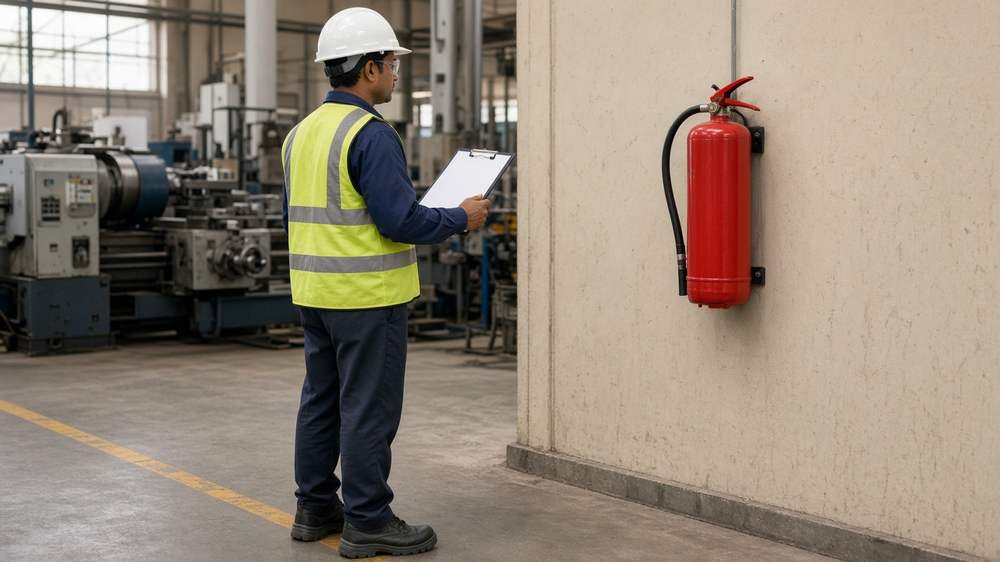
Section 40-B of the Factories Act, 1948 requires certain factories to appoint safety officers. You can see current openings on the NIFS jobs and placements page. For pay figures with sources, read our safety officer salary guide. If you are an engineer thinking of switching, our post on fire and safety engineer careers in India covers eligibility and scope.
Is the NIFS fire and safety course certificate recognised?
Yes. NIFS is NSDC approved and ISO 9001:2015 certified, and every paid NIFS course comes with a certificate from Acharya Nagarjuna University, a State Government University. The free Ergonomic Safety course gives a completion certificate only, not a university certificate.
| Recognition | What it means for you |
|---|---|
| NSDC approved | NIFS is approved by the National Skill Development Corporation |
| ISO 9001:2015 | NIFS follows a certified quality management system |
| Acharya Nagarjuna University | All paid courses carry a certificate from this State Government University |
| 25+ years, 65+ centres | NIFS has trained students for 25+ years across 65+ centres in 20 states & UTs, with 45,000+ alumni |
How do you join a fire and safety course at NIFS?
To join, pick the course that matches your qualification, find your nearest NIFS centre, and send an enquiry on WhatsApp or the enquiry page. The team confirms eligibility, fees, mode and the next batch date. You then submit your documents and complete admission at the centre or online.
- Choose your course from the table above, based on your last qualification.
- Find your nearest centre on the NIFS centres page.
- Send an enquiry on WhatsApp or the enquiry page with your name, qualification and city.
- Confirm fees, mode and batch date with the NIFS team.
- Submit your documents (mark sheets and ID proof) and complete admission.

Ready to start your fire and safety career?
Message NIFS on WhatsApp to ask about fees, batch dates and your nearest centre, or fill the enquiry form. You can also begin today with the free Ergonomic Safety course and browse openings on the jobs page.
Sources: NIFS course pages for CCFS, DFS, ADFS, PG DFS, B.Sc and B.Sc (Honours) (durations, eligibility, modes, modules and job roles, read 5 November 2026); National Fire Service College, Nagpur, B.Tech (Fire Engineering) prospectus (duration and eligibility).
Explore More
Companies Currently Hiring Through NIFS
RKEC PROJECTS LIMITED
SAFETY OFFICER
VARUN MOTORS
Safety Executive
SHIKHAR SERVICES AND CONSULTANCY
FIRE AND SAFETY AUDIT COORDINATOR
Frequently Asked Questions
What is the duration of a fire engineering course?
A B.Tech in fire engineering takes 4 years. Fire and safety courses at NIFS take 3–6 months (certificate), 1 year (DFS, PG DFS), 12 months (ADFS), 3 years (B.Sc) or 4 years (B.Sc Honours).
Can I do a fire engineering course after 12th?
Yes. For B.Tech fire engineering you need 12th with Physics and Maths and an entrance exam such as JEE Main. Without that, you can join the NIFS DFS, ADFS or B.Sc in Fire & Industrial Safety after 10+2 in any stream.
Is a diploma in fire and safety engineering the same as DFS?
Most searches for "diploma in fire and safety engineering" mean a 1-year fire and safety diploma. At NIFS this is the Diploma in Fire & Safety (DFS): 1 year, open to 10+2, ITI or any stream.
What is the fee for a fire and safety course at NIFS?
Fees depend on the course, centre and mode, so NIFS does not list them online. Contact NIFS on WhatsApp (+91 83743 40999) or the enquiry page for the current fee.
Can I study a fire and safety course online?
Yes. NIFS course pages list classroom and online modes for the certificate, diplomas, PG diploma and B.Sc. Ask your nearest centre which mode is open for your batch.
Start Your Career in Industrial Safety Today
NSDC-approved Diploma, Advanced Diploma, and Degree programs with a dedicated placement cell.