Human-in-the-Loop Safety: Why AI Should Assist the OSHE Professional—Not Replace Them
AI can see more. But should it decide more? Artificial intelligence is rapidly entering occupational safety and health through computer vision, predictive analytics, smart monitoring, robotics, wearable technologies and digital risk-management tools. The opportunity is significant: AI can process large volumes of information, identify patterns and provide early warnings. But the fundamental OSHE principle should remain unchanged: AI should strengthen professional judgement, not replace it.
A contributed article by Manoj Kumar Sharma, Assistant Professor, Department of Fire and Safety, Acharya Nagarjuna University (ANU) – Guntur, in academic collaboration with the National Institute of Fire and Safety (NIFS), Visakhapatnam.
Key takeaways
- AI detects, humans verify, the organisation controls. That is the Human-in-the-Loop model.
- Detection is not judgement. Only operational context can explain what an AI alert really means.
- Oversight must be real. The OSHE professional must be able to question, challenge, override and escalate, not just click "approve".
- AI can introduce hazards too, from automation bias to failures of safety-critical systems.
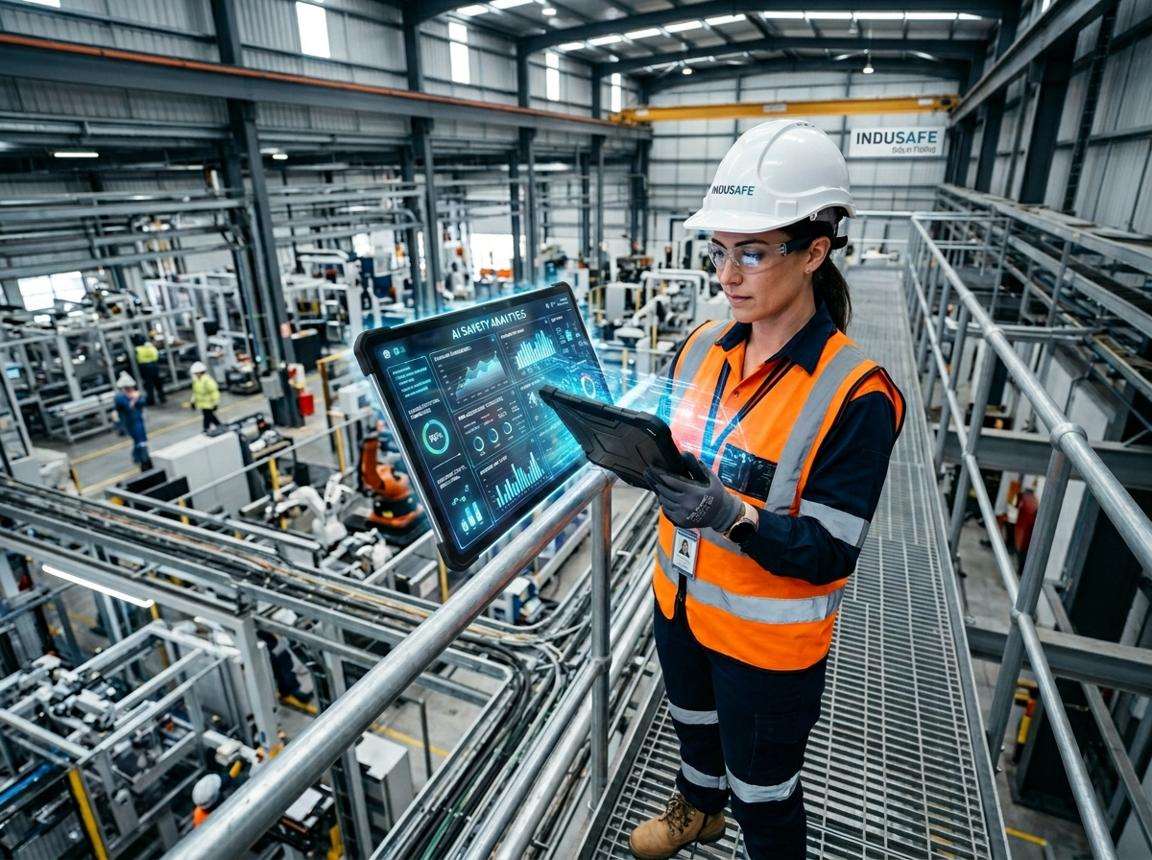
The International Labour Organization's 2025 global report identifies both the safety opportunities and emerging risks associated with AI, automation and digitalisation. It emphasises proactive risk assessment, worker participation and responsible implementation [1].
AI + OSHE: What Changes?
| Traditional OSHE | AI-assisted OSHE |
|---|---|
| Manual observation | Continuous digital monitoring |
| Periodic inspections | Real-time alerts |
| Historical analysis | Pattern and trend analysis |
| Reactive investigation | Predictive indicators |
| Human-only assessment | Human + AI decision support |
A 2026 systematic review of AI in occupational health and safety identified 43 peer-reviewed studies covering applications such as risk assessment, PPE monitoring, construction safety, mining and other workplace applications [2].
But more data does not automatically mean better decisions.
The Human-in-the-Loop Model
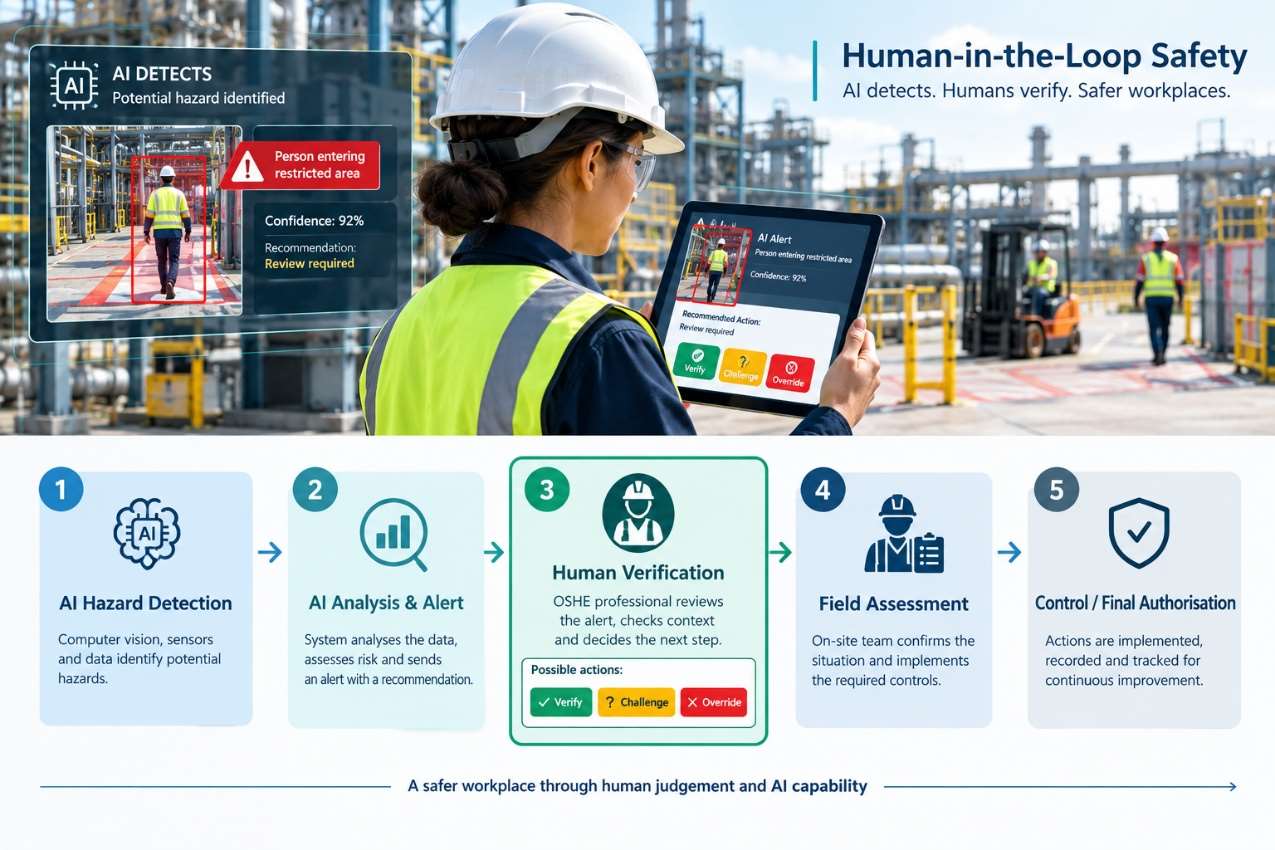
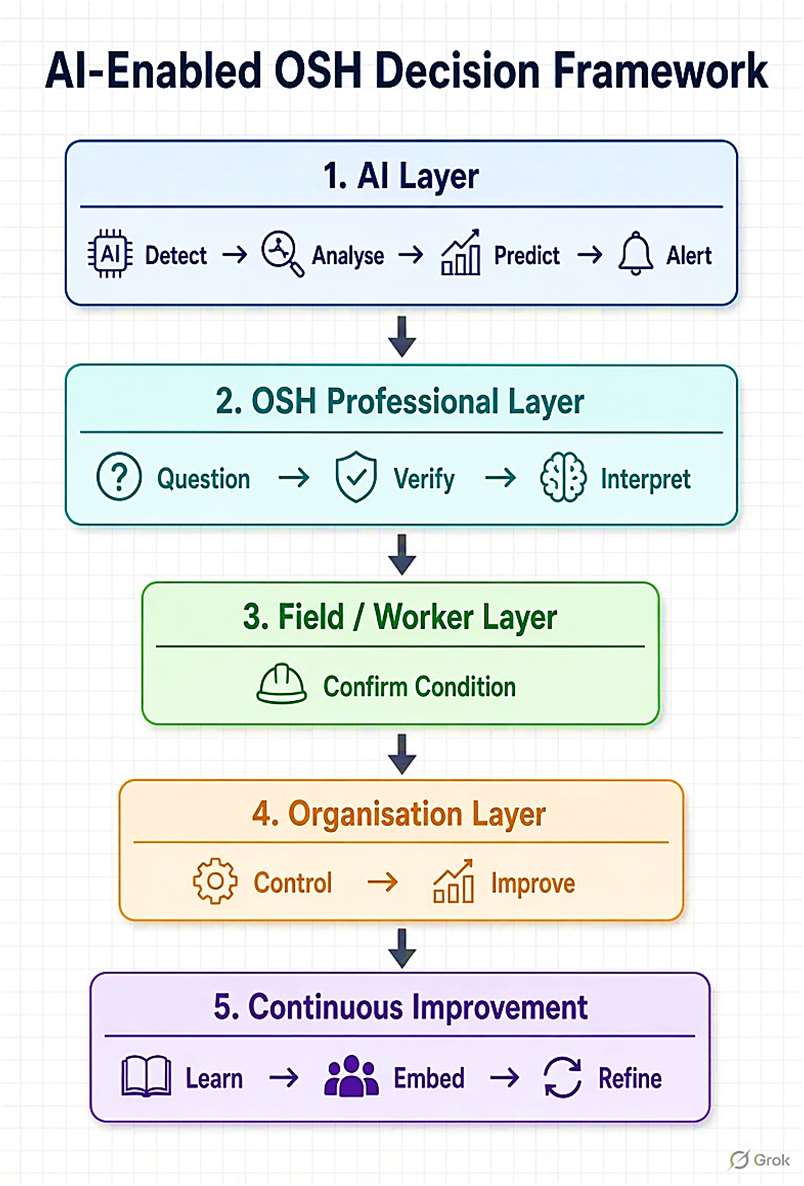
The principle is simple: AI detects → Humans verify → The organisation controls.
Why Must Humans Remain in the Loop?
1. Context matters
An AI system may identify a worker inside a restricted area. But only the operational context may explain whether that person is:
- performing authorised maintenance;
- responding to an emergency;
- carrying out an approved inspection; or
- actually violating a control.
Detection is not judgement.
2. AI can be wrong
AI systems can produce incorrect outputs because of limitations in data, system design, environmental conditions or model performance.
NIOSH has specifically highlighted concerns including AI "black-box" behaviour, transparency, accountability and the need for trustworthy AI risk management [3].
3. Humans can become over-reliant
Human oversight is ineffective if the person simply accepts every AI recommendation. The OSHE professional must be able to:
Question → Challenge → Override → Escalate
rather than simply:
Click → Approve
AI Can Create New OSH Risks
The question should not only be: "What hazards can AI detect?" It should also be: "What hazards can AI introduce?"
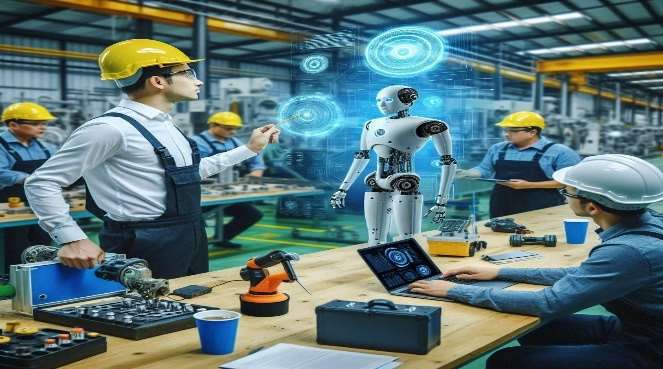
NIOSH's recent work identifies the need to consider AI-related hazards and has discussed an emerging framework around "algorithmic hygiene": applying occupational hazard-identification principles to algorithmic systems [4].
Potential issues include:
- automation bias;
- poor-quality data;
- lack of transparency;
- privacy concerns;
- changes in work intensity;
- reduced worker autonomy;
- human–machine interaction risks; and
- failures of safety-critical systems.
A Practical AI-OSHE Checklist
Before deploying AI in a safety-critical application, ask:
| Question | Required outcome |
|---|---|
| What does the AI do? | Clearly defined purpose |
| What can it get wrong? | Known limitations |
| Who verifies the output? | Named competent person |
| Can the decision be overridden? | Human authority |
| How is performance tested? | Validation evidence |
| What happens during failure? | Fallback procedure |
| Are workers involved? | Consultation & feedback |
| Is performance continuously reviewed? | Ongoing assurance |
NIST's AI Risk Management Framework similarly emphasises managing AI risks through trustworthy design, development, use and evaluation [5].
The Future of OSHE Is Not Human vs AI
The strongest model is neither complete automation nor rejection of technology. It is:
Human expertise + AI capability + strong safety systems
AI can provide:
More data → faster analysis → earlier signals
The OSHE professional provides:
Context → judgement → verification → accountability
That combination is where AI can create real safety value.
"AI should be powerful enough to assist, and controlled enough to be questioned."
That is the essence of Human-in-the-Loop Safety.
Share this with your safety team
AI detects. Humans verify. The organisation controls.
Build the judgement AI cannot replace
Hazard identification, risk assessment and the professional judgement behind them are covered hands-on in the Advanced Diploma in Industrial Safety (ADIS) at NIFS, and in the B.Sc in Fire & Industrial Safety offered with Acharya Nagarjuna University. Read the author's first article in this series: AI Can Make Work Safer, But Who Is Assessing the Risks Created by AI?
References
- International Labour Organization (ILO), 2025. ilo.org
- La Torre G, Manai MV, Meucci S, et al. Artificial intelligence and occupational health and safety: a systematic review. Journal of Public Health, 2026. doi:10.1007/s10389-026-02738-8
- NIOSH / CDC, 2024.
- NIOSH / CDC, 2026. Practical Strategies to Manage AI Hazards in the Workplace
- National Institute of Standards and Technology (NIST). AI Risk Management Framework (AI RMF 1.0). nist.gov
— Manoj Kumar Sharma
Assistant Professor, Department of Fire and Safety, Acharya Nagarjuna University (ANU) – Guntur
Companies Currently Hiring Through NIFS
RKEC PROJECTS LIMITED
SAFETY OFFICER
VARUN MOTORS
Safety Executive
SHIKHAR SERVICES AND CONSULTANCY
FIRE AND SAFETY AUDIT COORDINATOR
Frequently Asked Questions
What is Human-in-the-Loop safety?
It is a model where AI detects hazards and sends alerts, a competent OSHE professional verifies the alert in context, and the organisation decides and applies the controls. AI detects, humans verify, the organisation controls.
Why should AI not replace the safety professional?
AI detection is not judgement. AI can be wrong because of data, design or environmental limits, and only operational context can explain whether an alert is a real violation, authorised work or an emergency response.
What is automation bias in workplace safety?
It is the tendency to accept every AI recommendation without checking it. Oversight only works if the OSHE professional can question, challenge, override and escalate, rather than just click approve.
What should be checked before deploying AI in a safety-critical application?
Its defined purpose, known limitations, a named competent person who verifies outputs, human authority to override, validation evidence, a fallback procedure for failure, worker consultation, and ongoing performance review.
What new hazards can AI introduce at work?
Automation bias, poor-quality data, lack of transparency, privacy concerns, changes in work intensity, reduced worker autonomy, human-machine interaction risks and failures of safety-critical systems.
Start Your Career in Industrial Safety Today
NSDC-approved Diploma, Advanced Diploma, and Degree programs with a dedicated placement cell.