Industrial Safety Engineer (SBTET)
A regular full-time program affiliated to the State Board of Technical Education & Training, Andhra Pradesh, for practicing engineers moving into dedicated industrial safety roles.
Duration
One Year
Eligibility
Degree or Diploma in any branch of Engineering/Technology + 3 Years' Experience
Mode
Classroom (Regular, Full-Time)
Tier
Advanced Diploma
Fee Aid↓
EMI & Assistance
Salary Scope↓
₹3.0L – ₹4.8L/Yr
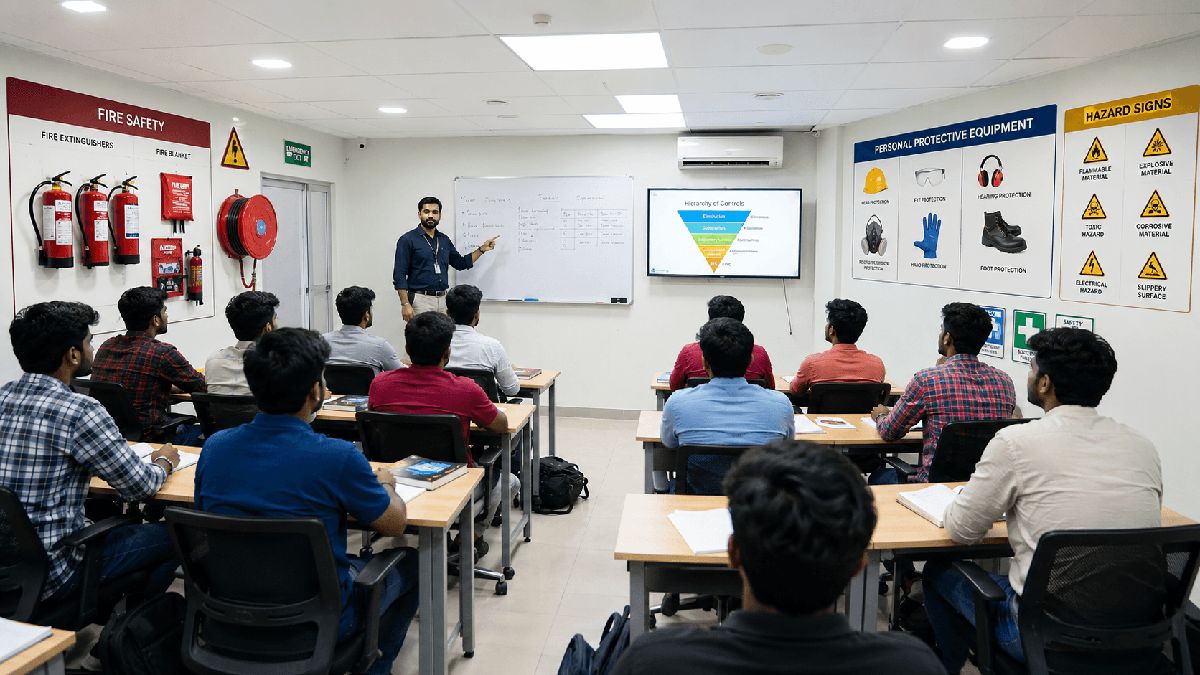
Core Curriculum & Modules
Hands-on practical & statutory compliance modules covered in this program:
- Industrial Safety Engineering
- Hazard Identification & Risk Assessment
- Safety Legislation
- Project & Practical Training
Career Paths & Designations
Immediate job designations our graduates step into upon course completion:
- Industrial Safety Engineer
- Plant Safety Officer
Statutory Legal Mandate & Industrial Demand
Under The Factories Act, 1948 (Section 40-B) and the Occupational Safety, Health and Working Conditions Code (OSH Code 2026), manufacturing plants, construction projects, and hazardous process units across India are legally mandated to appoint certified Safety Officers. Holding an accredited qualification like Industrial Safety Engineer (SBTET) from NIFS India gives you direct compliance eligibility for registered factory inspectorate audits.
₹3.0L – ₹4.8L / Year
₹6.5L – ₹11.0L / Year
₹18L – ₹35L / Year
Real Hands-On Drills at NIFS Practical Training Yard
Theoretical knowledge alone is never sufficient on an industrial plant floor. At NIFS India, every student enrolled in Industrial Safety Engineer (SBTET) receives intense physical training at our dedicated Practical Firefighting and Safety Yard:
Top Hiring Partners for SBTET ISE
Our alumni have been placed across leading industrial powerhouses:
Frequently Asked Questions
What is SBTET full form / what does SBTET mean?
SBTET stands for the State Board of Technical Education & Training, Andhra Pradesh — the body that affiliates NIFS India's Industrial Safety Engineer program.
What is the Industrial Safety Engineer (SBTET) course?
It's a one-year, full-time regular NIFS India program affiliated to SBTET Andhra Pradesh, for practicing engineers moving into dedicated industrial safety roles. Eligibility is a Degree or Diploma in any Engineering/Technology branch plus 3 years' experience.
What jobs can you get after the SBTET industrial safety course?
Graduates typically move into roles such as Industrial Safety Engineer or Plant Safety Officer.
What subjects does the SBTET industrial safety engineer course cover?
The one-year course covers Industrial Safety Engineering, Hazard Identification & Risk Assessment, Safety Legislation, and Project & Practical Training.
Check Seat Availability at Nearest NIFS Center
Direct admission counseling across 65+ training centers in India.
⚡ Instant response from regional senior counselor • Official admission confirmation & syllabus brochure via PDF.