Want to Master Safety Intelligence™ & AI Predictive Analytics?
Learn how NIFS incorporates AI risk modeling into its government-recognized Diploma & ADIS programs. Speak with our Senior Academic Counselors on WhatsApp.
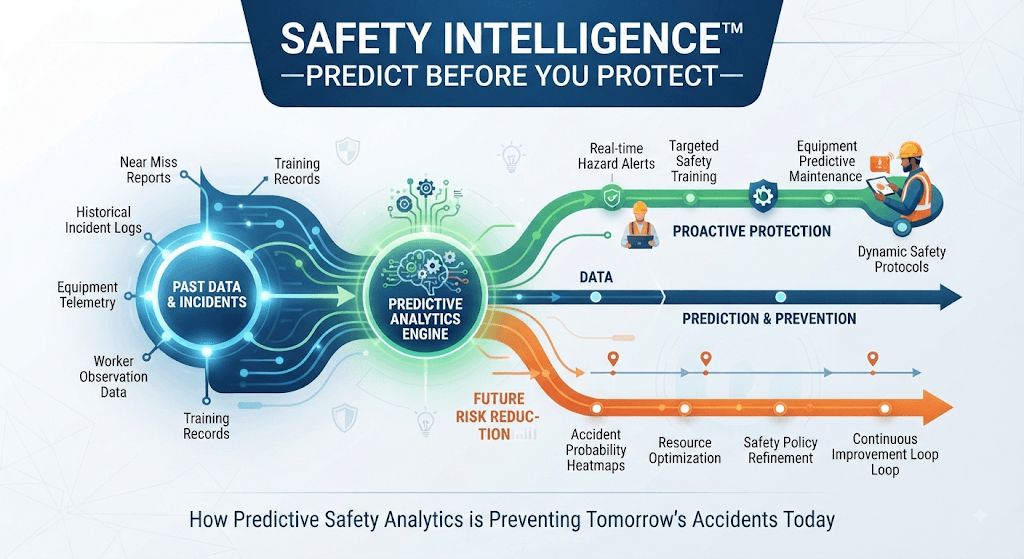
How Predictive Safety Analytics is Preventing Tomorrow's Accidents Today
Introduction: Reading Safety History Early
Every accident has a history. Unfortunately, most organisations begin reading that history only after someone gets injured. Imagine if we could read it earlier. Imagine if every unsafe act, every near miss, every equipment abnormality and every behavioural deviation became a warning instead of becoming tomorrow's accident.
This is the simple but powerful idea behind Safety Intelligence™: industrial accidents are often more predictable than we think. The organisations that learn to recognise weak signals before they become serious incidents will define the next generation of industrial safety.
One question has remained with me throughout my professional career:
Why do organisations become extremely active after an accident, when the warning signs were already present before it happened?
Every accident investigation I have participated in revealed one common truth: the incident itself was rarely the beginning. It was merely the final chapter. The real story had started days, weeks or sometimes months earlier.
It may have started with:
An ignored inspection
A repeated near miss
A damaged guard
A delayed maintenance activity
A shortcut that slowly became normal
A supervisor who assumed, "Nothing will happen."
These may appear to be individual events. But when they repeat, connect or gradually become accepted as normal, they begin to reveal a much larger story.
Accidents rarely arrive without notice. They often arrive after giving us numerous opportunities to prevent them. The challenge is not the absence of information. The challenge is recognising which information truly matters.
That is where Predictive Safety begins.
It is about:
Converting scattered observations into meaningful patterns
Turning patterns into informed decisions
Acting while there is still time to change the outcome
Learning from early signals before they become serious incidents
The future of safety will belong to organisations that learn to listen to these early signals.
The Anatomy of an Accident: Seven Days Before the Crash
To understand how accidents build up silently over time, consider this illustrative, day-by-day sequence of a typical industrial failure:
Monday: A worker slips while climbing a staircase. He regains his balance. Everyone laughs. No injury. Nothing is reported.
Tuesday: A forklift narrowly misses a contract worker. The operator apologises. The contractor continues walking. No damage. No report.
Wednesday: A machine guard is temporarily removed during maintenance. Production pressure increases. The guard is not replaced immediately. Nobody follows up.
Thursday: An operator notices a burning smell near an electrical panel. The smell disappears after a few minutes. The shift changes. Nobody records the observation.
Friday: A supervisor postpones a housekeeping inspection because an important customer is visiting the plant. The inspection is rescheduled.
Saturday: A near miss occurs during material handling. The team discusses it informally. No investigation. No corrective action.
Sunday: At 10:42 AM, an electrical fault ignites combustible material. Production stops. Emergency alarms activate. Employees evacuate. The incident becomes tomorrow's newspaper headline.
Now let me ask you one question. Did the accident really begin on Sunday? Or did it begin on Monday, when the organisation ignored its first warning?
THINK... JUST THINK!
Imagine driving your car. The fuel warning light appears. You ignore it. The engine warning light appears. You ignore it. The temperature gauge rises. You ignore it. Finally, the engine fails. Would you blame the engine, or the warnings you chose to ignore? Industrial accidents behave in exactly the same way.
Background: Moving Beyond Lagging Indicators
For decades, industrial safety has measured success using lagging indicators: Lost Time Injuries, Medical Treatment Cases, First Aid Cases, Property Damage, and Fatalities. These indicators remain important. But they all have one thing in common: they tell us what has already happened. Imagine managing your health by checking your blood pressure only after suffering a heart attack. Imagine servicing your vehicle only after the engine fails. Imagine replacing brakes only after an accident. That approach would make little sense. Yet many organisations still manage safety exactly that way.
India is entering one of the most exciting phases in its industrial history. Manufacturing is expanding rapidly, electric vehicle production is accelerating, semiconductor manufacturing is becoming a national priority, ports are growing, defence manufacturing is increasing, and renewable energy projects are multiplying across the country. With this unprecedented growth comes unprecedented responsibility. The future of Indian industry will not be judged only by production capacity. It will also be judged by its ability to protect the millions of people who make that growth possible. That responsibility demands something beyond compliance. It demands prediction.
QUOTE OF THE MONTH
Every accident whispers before it screams. — Dr. GPR Krishna, Ph.D.
For years we have proudly said: 'Safety First.' Today, I would like to ask a different question: Is safety really first if we identify hazards only after someone has already been exposed? Perhaps the next evolution of industrial safety is not better investigation; perhaps it is better anticipation.
During one of my visits to a manufacturing facility, a Plant Head made a statement that has stayed with me ever since. He said, 'Every accident surprises us.' I respectfully disagreed. The accident surprised us; the warning signs did not. They had been present for days. What surprised us was our inability to connect them. That conversation became one of the inspirations behind this volume. Because I firmly believe the future Safety Professional will no longer be recognised only for responding effectively; they will be recognised for recognising patterns that others never noticed.
Core Framework: The Predictive Safety Pyramid™
For decades, the safety profession has successfully used Heinrich's Safety Pyramid to understand accident causation. It taught us an important lesson: major accidents rarely occur in isolation. They are often preceded by numerous minor incidents, unsafe acts and unsafe conditions. That principle remains valuable. However, today's industries generate something that Heinrich never had access to: data.
Millions of data points are being generated every day, including CCTV footage, permit records, maintenance history, near misses, equipment alarms, behavioural observations, access control logs and training records. Artificial Intelligence now enables us to connect these pieces of information in ways that were never possible before.
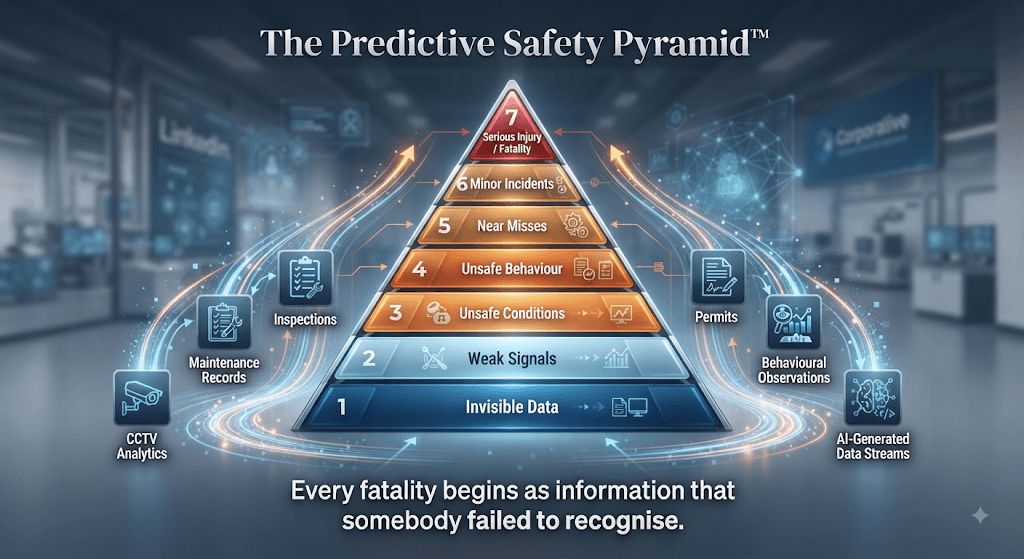
That is why I propose the next evolution. Not replacing Heinrich's Pyramid, but building upon it. I call it The Predictive Safety Pyramid™.
The Predictive Safety Pyramid™ shifts the focus from simply recording what happened to recognising what the available information is trying to tell us. It connects data, patterns, weak signals and human judgement so that intervention can happen earlier—before risk reaches the point of no return.
The real transformation happens when we stop looking at every observation as an isolated event and start asking what it reveals when placed alongside everything else.
For example:
One PPE violation may be an individual behaviour.
Repeated PPE violations may indicate a supervision or training issue.
PPE violations concentrated in one area may indicate an operational pressure or process problem.
A rising trend across multiple shifts may indicate a deeper organisational weakness.
The information was already there.
The Predictive Safety Pyramid™ — Shifting focus from lagging accident statistics to proactive risk signal intelligence
The difference is whether we recognise the pattern early enough to act.
This is where Predictive Safety moves beyond traditional incident statistics. It does not wait for the pyramid to build itself through incidents. It looks underneath the visible events for the signals that are already forming.
The objective is simple:
Do not wait for the accident to tell us what the data was trying to tell us earlier.
A mature Safety Intelligence system should therefore help organisations move through a continuous cycle:
The ultimate purpose of the Predictive Safety Pyramid™ is not to predict every accident with certainty. That would be unrealistic. Its purpose is to make emerging risk more visible, more understandable and more actionable while there is still an opportunity to prevent harm.
That is the real evolution of industrial safety:
From counting incidents to understanding patterns.
From reacting to events to recognising signals.
From looking backward to preparing forward.
Level
What Happens
What Leaders Should Do
Level 7
Invisible Data
Collect information before it is lost.
Level 6
Weak Signals
Recognise unusual patterns early.
Level 5
Unsafe Conditions
Eliminate hazards before exposure.
Level 4
Unsafe Behaviour
Coach people and reinforce safe practices.
Level 3
Near Misses
Investigate immediately and identify trends.
Level 2
Minor Incidents
Learn quickly before escalation.
Level 1
Serious Injury / Fatality
The final outcome everyone wants to prevent.
The most important lesson is this: fatalities do not begin at Level 1. They begin at Level 7. By the time an organisation reaches the top of the pyramid, it has already ignored hundreds of opportunities to intervene. That is the essence of Predictive Safety.
QUOTE OF THE MONTH
Fatal accidents are rarely sudden. They are usually the final chapter of a story that nobody finished reading. — Dr. GPR Krishna, Ph.D.
Decoding 'Weak Signals': Why 'Nothing Happened' is Dangerous
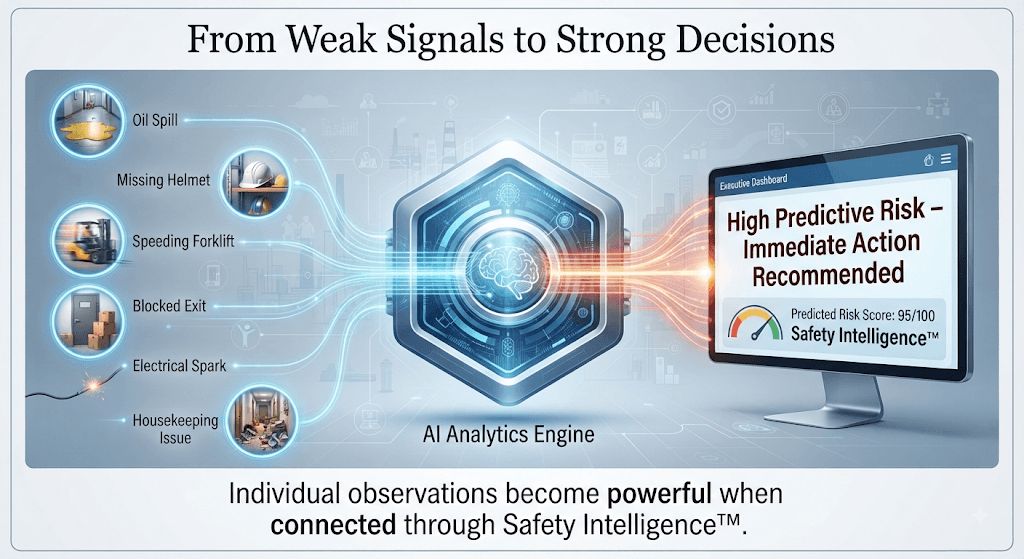
One of the most dangerous phrases in industrial safety is: 'Nothing happened.' Let me explain. A worker almost slips — nothing happened. A forklift brakes suddenly — nothing happened. An electrical panel emits a burning smell — nothing happened. A contractor enters a restricted area — nothing happened. A machine vibrates unusually for a few seconds — nothing happened. Exactly. Nothing happened... this time. Every one of these situations is a Weak Signal. Individually they appear insignificant; collectively they reveal the future. The problem is that organisations often investigate only when something finally happens. Predictive organisations investigate why nothing happened today, so that nothing happens tomorrow.
THINK... JUST THINK!
Suppose five different supervisors each report a small oil spill in different areas over two weeks. Each spill is cleaned. Each report is closed. No incident occurs. Would you consider those five reports completed? Or would you ask why the same problem keeps appearing? That single question separates reactive organisations from predictive organisations.
Whenever I conduct discussions with Safety Officers, I ask one simple question: 'What do you notice repeatedly?' The answers are almost always similar: workers bypassing walkways, repeated PPE violations, forklift speeding, poor housekeeping, temporary electrical connections, and blocked emergency exits. None of these are new or surprising, yet they appear again and again. That tells us something important: the issue is not identifying hazards; the issue is recognising patterns. Patterns are where prediction begins.
Paradigm Shift: Moving from Investigating Past Accidents to Predicting and Preventing Future Incidents
Traditional Safety vs. Predictive Safety
To contrast these two eras, consider the following key paradigm shifts:
Traditional Safety
Predictive Safety
Investigates accidents
Predicts accidents
Uses lagging indicators
Uses leading indicators
Focuses on reports
Focuses on patterns
Responds after incidents
Intervenes before incidents
Measures injuries
Measures emerging risk
Looks backward
Looks forward
Neither approach replaces the other. Traditional safety remains essential. Predictive Safety simply extends the profession into a new era.
Why Leading Indicators Matter More Than Ever
Every organisation proudly displays statistics such as Lost Time Injury Frequency Rate (LTIFR), Total Recordable Incident Rate (TRIR), First Aid Cases, and Near Miss Reports. These are valuable. But imagine trying to drive a car by looking only through the rear-view mirror. You can clearly see where you have been; you cannot see what is approaching. Leading indicators are your windshield.
Leading indicators help organisations answer critical risk-mitigation questions:
Which departments are showing increasing unsafe behaviour?
Which contractors require additional supervision?
Which equipment is repeatedly associated with unsafe conditions?
Which work permits experience the highest number of deviations?
Which operational areas generate the greatest number of weak signals?
These questions allow leaders to act before risk becomes reality. India is investing heavily in becoming a global manufacturing powerhouse. But world-class manufacturing requires world-class safety. The next competitive advantage will not come only from faster machines or larger factories. It will come from organisations that identify risks before they interrupt production, damage assets, or harm people. Prediction is no longer a luxury; it is becoming a business necessity.
LEADERSHIP INSIGHT
The organisations that learn to recognise patterns today will prevent tragedies tomorrow.
— Dr. GPR Krishna, Ph.D.
When Data Starts Telling a Story
One sentence has stayed with me throughout my career: 'Every organisation records data. Very few organisations recognise patterns.' I have seen plants with excellent documentation—inspection reports, audit reports, near-miss reports, permit records, training records, and maintenance history—thousands of pages and observations. Yet, when I ask, 'What are your top five emerging risks?', there is often silence. The information exists; the intelligence does not. That difference is exactly why I believe Predictive Safety Analytics will become one of the most valuable leadership tools of the coming decade.
Imagine that over a period of three months, a manufacturing plant records the following observations: 42 minor oil spills, 27 forklift speed violations, 18 blocked emergency exits, 14 hot work permit deviations, 39 repeated PPE violations, 22 housekeeping observations, 9 electrical abnormalities, and 11 contractor access violations. Each event is investigated individually. Each report is closed. Everything appears under control.
But now imagine Artificial Intelligence analysing all of them together. Instead of seeing 182 separate observations, it recognises one developing pattern: Maintenance standards are gradually declining in one production block. That insight is invisible in individual reports. It becomes visible only when information is connected. That is the true value of Predictive Safety Analytics. It does not replace human judgement; it reveals relationships that human beings may never notice.
QUOTE OF THE MONTH
Accidents are events. Patterns are intelligence. Leaders must learn to see the difference.
— Dr. GPR Krishna, Ph.D.
Case Study: The Near Miss That Saved an Entire Plant
To see this in action, let us review an illustrative scenario based on recurring industrial safety patterns. A large engineering manufacturing facility proudly displayed an impressive statistic: Zero Lost Time Injuries for 18 months. Management celebrated the achievement. Visitors appreciated the performance. Everything appeared excellent.
However, a young Safety Engineer noticed something unusual. Near misses involving forklifts had quietly increased over four consecutive months:
January: 6 near misses
February: 11 near misses
March: 18 near misses
April: 29 near misses
No injuries. No damage. No major incidents. Most people considered the trend insignificant. The Safety Engineer did not. He presented the data to management. Artificial Intelligence further analysed the information and discovered an interesting pattern: nearly 80% of the near misses occurred during shift change, at three common intersections, involving contract workers, and during periods of production pressure.
Management immediately implemented corrective actions. Forklift routes were redesigned, pedestrian walkways were modified, shift-change traffic was reorganised, additional AI alerts were introduced, and contractor induction programmes were strengthened. Within three months, near misses reduced dramatically, and no serious accident occurred. The organisation celebrated something even more important than zero injuries: they celebrated zero surprises. That is Predictive Safety.
THINK... JUST THINK!
If one near miss teaches a lesson... what can one hundred near misses teach? Perhaps the greatest value of a near miss is not that nothing happened. Perhaps its greatest value is revealing what might happen next.
Dr. GPR Krishna, Ph.D.
CEO's Corner: The Boardroom Business Case
Modern CEOs no longer ask only about production. They ask about resilience, business continuity, operational excellence, ESG performance, investor confidence, and brand reputation. Every major industrial accident affects each of these. Predictive Safety Analytics therefore deserves a place in every boardroom discussion. Not because it is fashionable, but because it is commercially intelligent. The question should never be, 'How much will Predictive Safety cost?' The better question is, 'How much business value will Predictive Safety protect?'
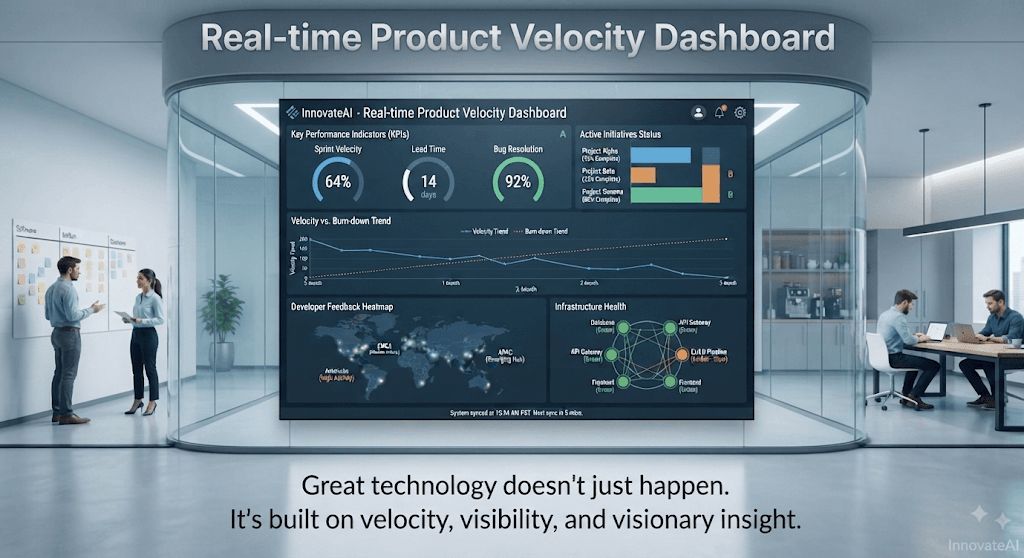
Imagine arriving at your office every morning. Instead of reading yesterday's incident report, your dashboard displays:
Executive Indicator
Today's Status
Overall Predictive Risk Score
78 / 100
High-Risk Areas
4
Repeated Unsafe Behaviours
37
Near Miss Trend
Increasing
Forklift Risk Index
Medium
PPE Compliance
98.4%
Contractor Risk Level
High
Hot Work Monitoring
Normal
Critical AI Alerts (24 hrs)
3
Immediate Leadership Attention Required
Electrical Maintenance Area
This is no longer a safety report. It becomes a leadership decision-making tool.
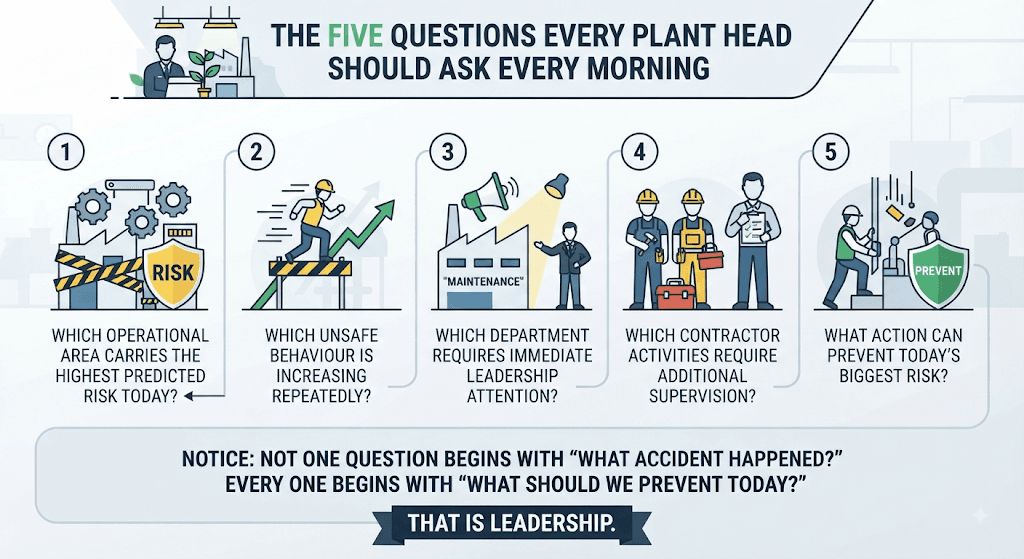
The Five Questions Every Plant Head Should Ask Every Morning
Before production begins, every Plant Head should know the answers to these five questions:
Which operational area carries the highest predicted risk today?
Which unsafe behaviour is increasing repeatedly?
Which department requires immediate leadership attention?
Which contractor activities require additional supervision?
What action can prevent today's biggest risk?
Predictive Safety Analytics in Action — Identifying high-risk activities before work begins
Notice something: not one of these questions begins with 'What accident happened?' Every one of them begins with 'What should we prevent today?' That is leadership.
Many organisations proudly report: 'We completed 100 inspections this month.' That sounds impressive. But another question matters even more: What changed because of those inspections? Inspection is an activity; improvement is the outcome. Predictive Safety Analytics ensures inspections become opportunities for learning rather than routine compliance exercises.
The next decade will not belong to organisations that simply collect more safety data. It will belong to organisations that ask better questions. Data alone never prevented an accident. Leadership supported by intelligent analysis does. That is why Predictive Safety Analytics is not merely another digital tool. It represents a new way of leading industrial safety.
LEADERSHIP REFLECTION
Great organisations don't wait for risk to become visible. They make invisible risk visible.
— Dr. GPR Krishna, Ph.D.
The Vision: The Factory of 2037
Close your eyes once again. Now imagine an Indian manufacturing plant in the year 2037. The factory is operating at full capacity. Production targets are being achieved. Autonomous vehicles transport materials across the shop floor. Collaborative robots work safely beside people. Digital twins mirror every production process in real time. Nothing looks extraordinary, yet everything has changed.
Every worker entering the plant is automatically verified for PPE compliance. Every forklift movement is monitored against predictive collision models. Every confined space permit is digitally validated before entry. Every hot work activity is linked to nearby fire protection systems. Every maintenance activity contributes to a live Predictive Risk Score. Artificial Intelligence continuously analyses millions of safety observations.
But something even more important has changed: people no longer wait for accidents; they expect warnings. Safety meetings no longer begin by discussing yesterday's incidents; they begin by discussing tomorrow's risks. The Safety Officer no longer spends most of the day searching for hazards. Instead, the system identifies the highest-risk activities and presents them before work begins. This is not automation replacing people; this is intelligence empowering people. This is the next chapter of industrial safety.
Leadership Reflection: Evolving from Investigation to Prediction
Every profession evolves. Medicine evolved from treatment to preventive healthcare. Maintenance evolved from breakdown maintenance to predictive maintenance. Quality evolved from inspection to quality assurance. Industrial safety must now evolve from incident investigation to risk prediction. That evolution will not happen because technology exists; it will happen because leaders decide to think differently.
The next generation of Safety Professionals will not be remembered for the number of inspections they conducted. They will be remembered for the accidents they prevented before anyone else recognised the danger. That is true leadership. Throughout my journey, I have realised one simple truth: technology never changes an organisation by itself; people do. The most successful organisations I have worked with had one thing in common: their leaders never asked, 'Who made the mistake?' Instead, they asked, 'What did the system fail to tell us?' That single change in thinking transforms blame into learning. And learning is where Predictive Safety begins.
QUOTE OF THE MONTH
Great organisations do not predict the future. They prepare for it before others do.
— Dr. GPR Krishna, Ph.D.
Questions I Am Asked Most Often (FAQ)
1. Is Predictive Safety only for large industries?
No. Prediction is a way of thinking before it becomes a technology. Even small and medium-sized industries can begin by identifying recurring unsafe behaviours, analysing near misses, and recognising patterns in routine operations. Technology strengthens the process; leadership starts the process.
2. Do we need Artificial Intelligence to begin Predictive Safety?
Not necessarily. Artificial Intelligence accelerates prediction. However, organisations can begin today by systematically analysing leading indicators, recurring observations, and behavioural trends. AI simply makes the process faster, more accurate, and scalable.
3. What is the first step?
Start by asking one question every morning: 'What is trying to tell us something today?' That question alone changes the culture of safety discussions.
4. How do we know whether our organisation is becoming predictive?
Simple. Observe your safety meetings. If the conversation focuses mainly on yesterday's incidents, you are still reactive. If the conversation focuses on today's risks, you are becoming proactive. If the conversation focuses on tomorrow's possibilities, you have entered the world of Predictive Safety.
5. Will Predictive Safety replace traditional safety management?
Never. Traditional safety remains the foundation. Predictive Safety builds the next floor above that foundation. The future belongs to organisations that successfully integrate both.
Summary:
What Every Safety Professional Should Remember
Before you close this journal, remember these ten thoughts:
Every accident begins long before the incident itself.
Weak signals are valuable only when they are recognised.
Near misses are not statistics - they are early warnings.
Data becomes valuable only when it improves decisions.
Artificial Intelligence supports judgement. It does not replace it.
Leadership is measured by prevention, not reaction.
Prediction is the highest form of accident prevention.
Safety Intelligence™ begins where isolated information becomes connected knowledge.
Every worker deserves a workplace that learns before people get hurt.
The future belongs to organisations that predict, prepare and protect.
Conclusion and Call to Action
The future of industrial safety will not be determined by technology alone; it will be determined by leadership. Technology provides visibility, data provides information, and Artificial Intelligence provides analysis. But leadership transforms all three into action. If your organisation can predict equipment failures, predict production bottlenecks, and predict market demand, then it should also aspire to predict risks that threaten the lives of its people. Because nothing is more valuable than the people who build your organisation every single day.
If this edition has encouraged you to look beyond accident statistics, start a conversation within your organisation. Ask your leadership team:
What weak signals are we ignoring?
Which risks keep repeating?
What patterns have we never analysed?
Are we managing safety... or are we predicting it?
One meaningful conversation can prevent one life-changing incident. And sometimes... that is enough to change an entire organisation.
Author: Dr. GPR Krishna, Ph.D. — GM Projects, IFESM, NIFS
Final Thought
THE FINAL WORD
History remembers organisations that changed the way the world worked. Tomorrow, history will also remember the organisations that changed the way the world stayed safe. Perhaps the greatest achievement of industrial safety will not be creating better accident reports. It will be creating workplaces where those reports become increasingly unnecessary.
The future will not belong to organisations that investigate the fastest. It will belong to organisations that recognise the earliest warning, act with courage, and prevent the accident that never appears in tomorrow's headlines. That is not simply Predictive Safety. That is Safety Intelligence™.
And I sincerely believe India has the talent, the technology and the leadership to become the world's benchmark for predictive industrial safety. The journey has already begun. The only remaining question is: Will your organisation lead it?
Every accident leaves evidence. Great organisations learn from that evidence. Extraordinary organisations act before the evidence becomes an accident. — Dr. GPR Krishna, Ph.D.
Advance Your Career with NIFS Safety Intelligence™ Programs
Explore NIFS government-recognized and NSDC-approved safety engineering programs across 70+ centers in India.
Not yet qualified?Enroll in NIFS 12-Month Govt/NSDC Diploma in Fire & Safety to become eligible for campus recruitment drives.Check Course Eligibility →
Frequently Asked Questions
What is Safety Intelligence™ in industrial safety?
Safety Intelligence™ is a predictive safety methodology that uses data analytics, computer vision, and behavioral indicators to predict workplace risks before accidents happen.
How does NIFS incorporate Safety Intelligence™ in safety officer training?
NIFS integrates predictive safety analytics, hazard identification tools, and AI-driven risk modeling directly into its ADIS and HSE diploma curricula.
Why is predictive safety analytics important for HSE Officers in 2026?
Predictive analytics shifts safety management from reactive incident reporting to proactive hazard prevention, making HSE officers indispensable in top manufacturing and oil & gas firms.
NIFS Admissions Open
Start Your Career in Industrial Safety Today
NSDC-approved Diploma, Advanced Diploma, and Degree programs with a dedicated placement cell.