Safety Intelligence: AI for Industrial Safety
Industrial safety has always been regarded as the backbone of sustainable industrial growth. Every machine that operates safely, every employee who returns home unharmed, every fire that is prevented, and every hazard that is identified before it causes harm contributes directly to the success of an organization. Yet, despite remarkable technological advancements, industries worldwide continue to experience workplace accidents, occupational illnesses, fires, explosions, and catastrophic failures.
“Every accident is preceded by hundreds of unnoticed signals. Most organisations investigate the accident. Few investigate the signals. Safety Intelligence® begins where traditional safety ends.”
1. What is Safety Intelligence®?
During my interactions with large-scale industries across India, I have observed one common reality: every company has safety data; very few have safety intelligence.
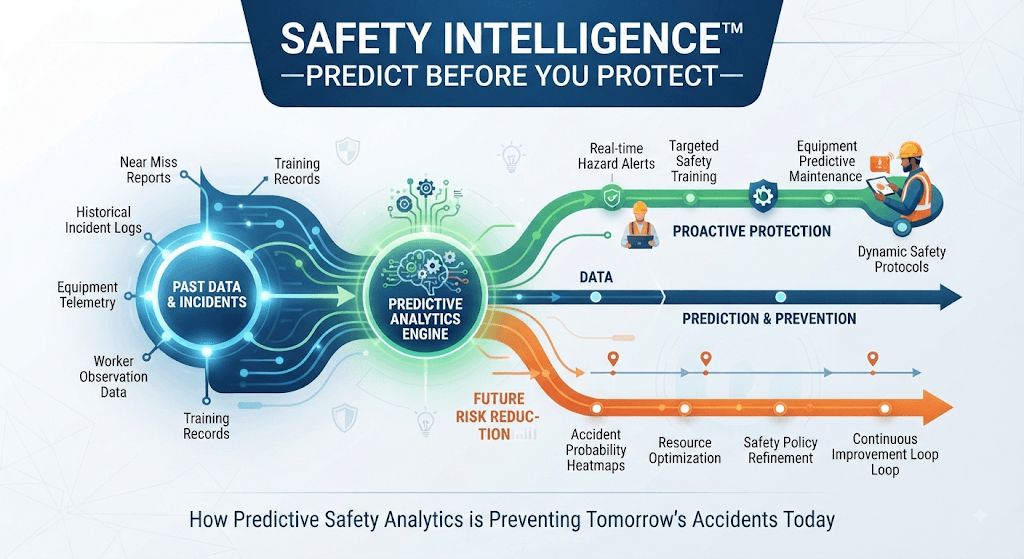
Safety Intelligence® is more than technology. It is not merely Artificial Intelligence, software, or another management framework. It is a comprehensive philosophy that combines human expertise, engineering excellence, leadership commitment, behavioural science, data analytics, and intelligent technologies to create workplaces capable of anticipating risks before they become incidents. Instead of measuring success solely by the number of accidents that have already occurred, Safety Intelligence® focuses on understanding the conditions that could lead to future accidents and eliminating them proactively.
India is standing at the threshold of a historic industrial revolution. From semiconductor manufacturing plants to mega data centres, unprecedented growth is exploding across the country. But industrial growth without an evolution in safety management is a dangerous combination. Industry cannot afford to ignore this.
The Medical Analogy: Data vs. Intelligence
Imagine a doctor who looks at your blood test but cannot see your ECG or medical history. Each report looks normal individually. Together, they reveal an impending health crisis. This is exactly how most factories operate today: they possess enormous amounts of safety data in silos, but almost zero integrated safety intelligence.
2. Why Companies Are Shifting to Predictive Safety Models
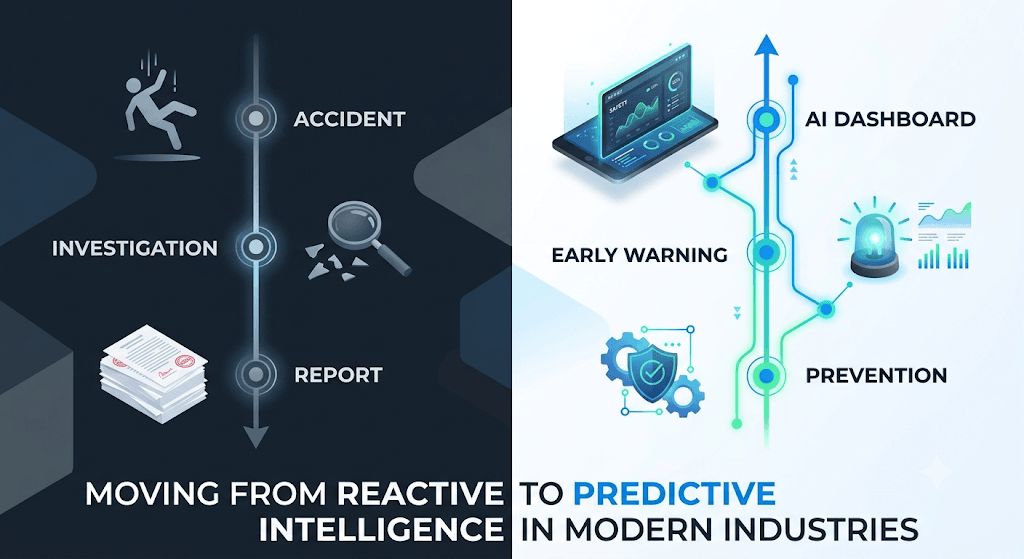
Traditional safety programs rely primarily on lagging indicators such as Lost Time Injury Frequency Rate (LTIFR) and post-incident reports. Managing safety by looking only at past accidents is exactly like driving a car while staring into the rear-view mirror: you know where you have been, but you cannot see the crash ahead.
Today, leading enterprises across manufacturing, energy, and infrastructure are shifting to predictive safety models. Because production targets change daily and supply chains require immediate responses, waiting for a monthly safety report is no longer viable. Decision-makers require real-time visibility into workplace risks.
"Safety can no longer remain a department that responds after an incident has occurred. It must become an intelligent organisational capability that continuously predicts, analyses, and prevents risks before they materialise."
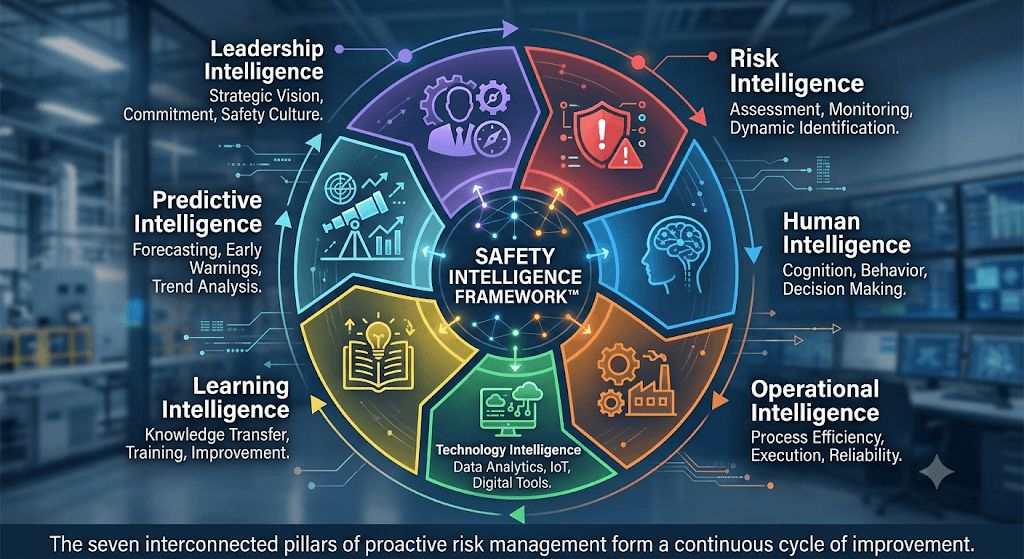
3. The 7 Pillars of the Safety Intelligence® Framework
Safety Intelligence® is built on seven interconnected pillars that integrate human leadership with predictive technology:
| Pillar | Focus Area | Core Action |
|---|---|---|
| 1. Leadership Intelligence | Culture & Strategy | Make safety a strategic executive priority, not just a legal obligation. |
| 2. Risk Intelligence | Continuous Monitoring | Evaluate emerging hazards dynamically instead of during annual reviews. |
| 3. Human Intelligence | Behavioural Science | Understand why workers take shortcuts rather than blaming them post-incident. |
| 4. Operational Intelligence | Cross-Department Data | Connect maintenance, HR, and operations data to spot early warning signals. |
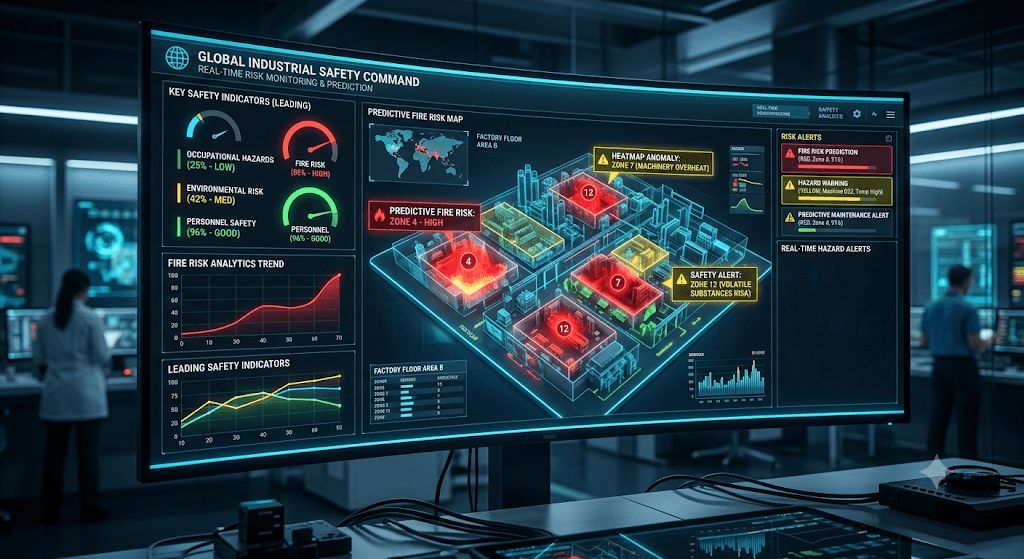
| 5. Technology Intelligence | AI & IoT Integration | Deploy smart cameras and sensors for real-time hazard and PPE detection. |
| 6. Learning Intelligence | Blame-Free Reporting | Encourage near-miss reporting without fear of punishment to promote learning. |
| 7. Predictive Intelligence | Forecasting Risk | Analyse multi-source data patterns to intervene before a disaster strikes. |
4. Real-World Case Study: Connecting the Dots
Consider a modern manufacturing plant. Routine safety inspections repeatedly catch workers removing their protective helmets after working for 3-4 hours.
Independently, safety officers view this as a simple behavioural violation. But when Safety Intelligence® connects disparate data sources:
- Maintenance records show increased equipment vibration and noise.
- Environmental sensors detect rising heat levels in that zone.
- HR data highlights massive overtime schedules during the previous month.
- Operations data reveals aggressive production deadlines.
The Intelligence Breakthrough: Workers are fatigued, overheating, and under immense pressure. Removing helmets is a symptom of extreme thermal stress and fatigue. Management improves ventilation and adjusts shift rotations immediately—proactively preventing a severe heat stroke or traumatic head injury before an accident happens.
5. Future of Safety Intelligence® & AI Integration
What is coming next in industrial safety technology?
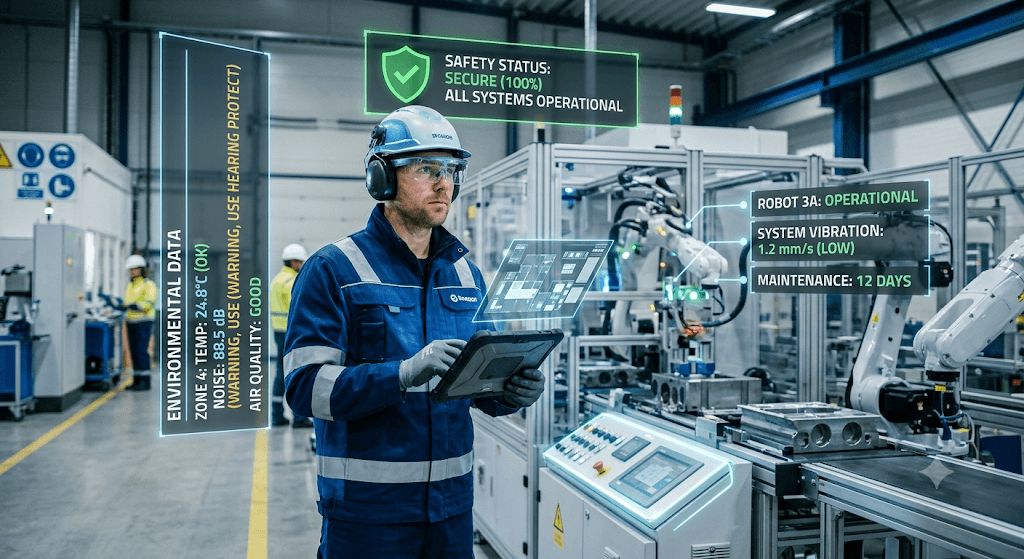
- AI-Assisted Surveillance: Computer vision algorithms detecting missing PPE, spill hazards, fire risks, and unauthorised zone access in real time.
- Wearable Tech: Smart vests and bands monitoring worker fatigue, heart rate variability, and environmental heat index.
- Drone Inspections: Autonomous drones inspecting confined spaces, boilers, and high-voltage transmission lines, keeping humans out of high-risk zones.
- Digital Resilience: Protecting cloud-connected safety technology and industrial control systems from cyber threats.
Will AI Replace Safety Professionals?
No. Artificial Intelligence will never replace human empathy, leadership, ethics, and moral decision-making. AI is an assistant that automates data monitoring—freeing safety leaders to focus on mentorship, culture, and strategic risk reduction.
6. Key Takeaways & Summary
- Safety must evolve from passive legal compliance to active, continuous intelligence.
- Leadership commitment establishes the true baseline of safety culture.
- Data becomes valuable only when transformed into actionable risk insights.
- Predictive thinking prevents incidents before they occur.
- Safety excellence directly drives operational and business performance.
Frequently Asked Questions (FAQ)
1. What is Safety Intelligence®?
Safety Intelligence® is a proactive management philosophy that integrates leadership, human expertise, engineering controls, digital technologies, behavioural science, and predictive analytics to assess and prevent workplace risks before incidents happen.
2. How does it differ from traditional safety management?
Traditional safety relies heavily on lagging indicators (past accidents, Lost Time Injury rates). Safety Intelligence® focuses on leading indicators and predictive analytics to eliminate hazards before harm occurs.
3. Can Small & Medium Enterprises (SMEs) implement Safety Intelligence®?
Yes. Safety Intelligence® is a management mindset, not an expensive software requirement. SMEs can start by breaking down data silos, encouraging transparent near-miss reporting, and strengthening leadership engagement.
4. Which industrial sectors benefit the most?
Manufacturing, construction, oil & gas, mining, power generation, chemical processing, pharmaceuticals, logistics, ports, and heavy infrastructure projects benefit significantly.
Have Questions About Admissions, Eligibility, or Fees?
Chat directly with NIFS Official Career Advisors on WhatsApp for free counseling and course guidance.
Chat on WhatsApp (+91-8374-340-999)Ready to Start Your Career in Fire & Industrial Safety?
Explore NIFS government-recognized and NSDC-approved diploma programs.
Companies Currently Hiring Through NIFS
NIFS/IFESM
SAFETY PROFESSIONAL
ROBOMATIC PRECON PVT LTD
SAFETY OFFICER
Beekay Steel Industries Ltd
Safety Officer
Frequently Asked Questions
What are the eligibility requirements for Safety Intelligence®: Industrial Safety for a New India (From Reactive to Proactive Intelligence in the Age of AI) at NIFS?
Eligibility ranges from 10th pass for certificate courses to 12th science or ITI/Diploma/Degree for advanced safety diplomas. Counselors verify certificates during admission.
Are NIFS Fire and Safety programs NSDC and university recognized?
Yes, NIFS courses are NSDC-approved, recognized by PSU, private industrial employers, and overseas firms in Gulf countries.
Does NIFS provide placement assistance after course completion?
Yes, NIFS has a dedicated placement cell and 45,000+ alumni.
Start Your Career in Industrial Safety Today
NSDC-approved Diploma, Advanced Diploma, and Degree programs with a dedicated placement cell.