Free Ergonomic Safety Course with Certificate (India): Take the 2-Minute Desk Check First
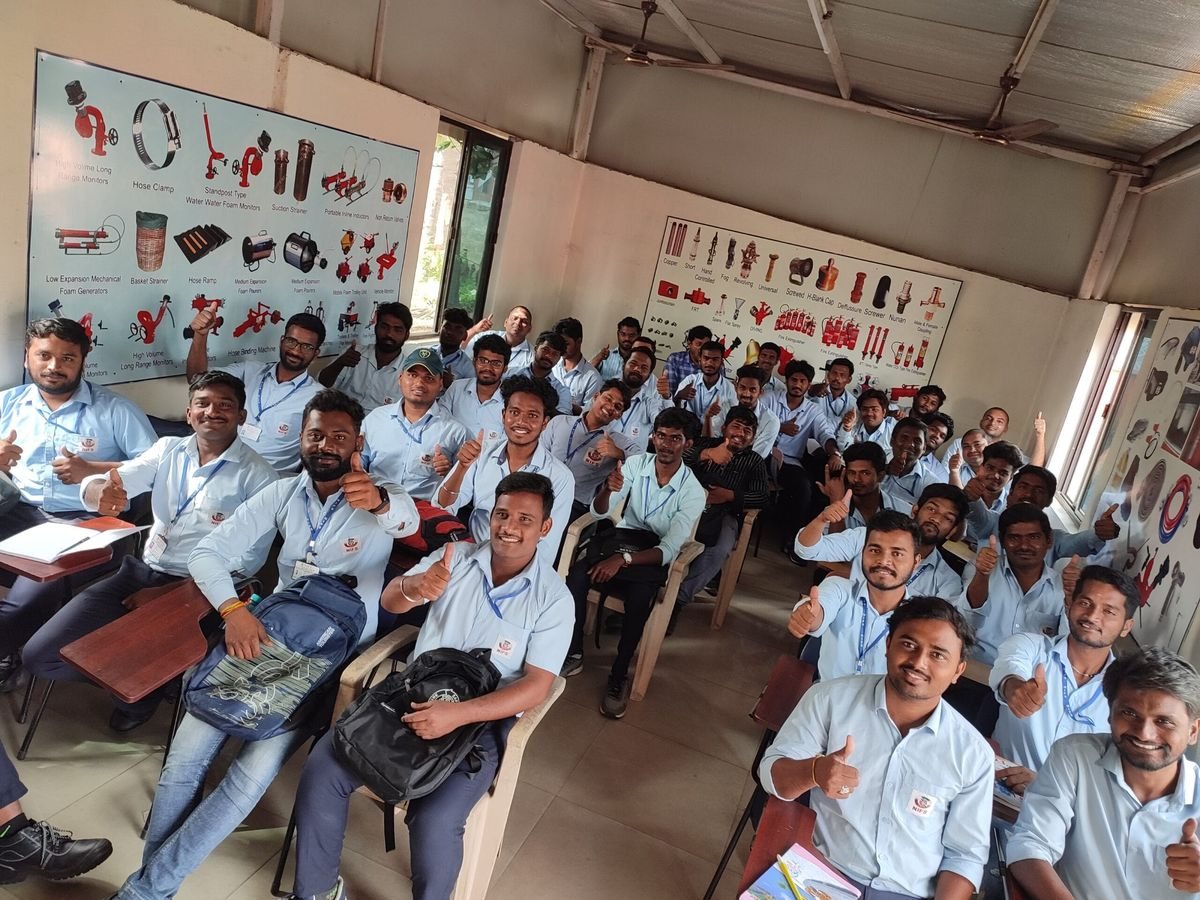
Yes, NIFS India offers a free ergonomic safety course with a certificate. It is called Ergonomic Safety (NIFS ES): about 3 hours online, a downloadable study guide, a 20-question exam, and a certificate emailed to you within 3 days. Before you start, take the 2-minute desk check below. If you answer "No" to three or more questions, your workstation is probably straining your body.
| Free Ergonomic Safety (NIFS ES) | Details |
|---|---|
| Cost | Free: register, study guide and exam |
| Time | About 3 hours (2 hours theory, 1 hour assessment) |
| Exam | 20 multiple-choice questions, 1 mark each, 10 minutes, no negative marking |
| Certificate | Emailed by NIFS within 3 days of completing the exam |
| Retake | Yes, any time, to improve your score |
| Suits | Office staff, supervisors, shop-floor and site workers, safety trainees, students |
Free course · NIFS ES
Register free and start now
3 hours online, a study guide and a certificate by email. Fill this in and you go straight into the course.
The 2-minute desk check: 10 questions (share it with your team)
Answer Yes or No for your usual workday. A "No" is a warning sign.
- My wrists stay straight when I type or use tools.
- My elbows stay close to my body, not stretched out in front.
- What I use most is between mid-thigh and shoulder height.
- I change position instead of holding one posture for long stretches.
- I use help or equipment for heavy loads, not just my back.
- No hard edge presses on my wrists, forearms or thighs.
- There is enough space under my desk or workstation for my legs.
- There is no glare on my screen or work area.
- I take short breaks to move and stretch.
- I do not get pain, numbness or tingling that returns at the same point every workday.
Three or more "No" answers? Take the free course below, and send this check to a colleague who sits or lifts all day.
Share this desk check on WhatsApp
What is ergonomics?
Ergonomics means designing work to fit the person, instead of forcing the person to fit the work. The International Ergonomics Association defines it as "the scientific discipline concerned with the understanding of interactions among humans and other elements of a system, and the profession that applies theory, principles, data and methods to design in order to optimize human well-being and overall system performance." In plain words: a desk, a tool or a lifting task should be set up so that it does not hurt you.
What is a musculoskeletal disorder (MSD)?
A musculoskeletal disorder is an injury or pain in muscles, tendons, joints or nerves that builds up over time. It is the main harm that poor ergonomics causes. The NIFS course lists these as examples: cumulative trauma disorders, repetitive motion injuries, back injuries, and strains and sprains. Early warning signs include pain, stiffness, weakness, swelling, reduced range of motion, clicking or grinding joints, numbness or tingling, tenderness and fatigue.
How common are musculoskeletal conditions?
Very common. According to the World Health Organization, about 1.71 billion people worldwide live with a musculoskeletal condition, and low back pain is the single leading cause of disability in 160 countries. Work setup is one of the causes you can change.
What causes work-related MSDs?
NIOSH, the US occupational safety research agency, names repetition, force, non-neutral (awkward) posture and vibration as the main risk factors for upper-body work-related musculoskeletal disorders, and notes that redesigning the task or equipment works better than telling workers to "lift correctly" (NIOSH). The NIFS course teaches you to spot nine common hazards:
What is the "power zone"?
The power zone is the area between mid-thigh and shoulder height, close to your body. Keep what you use often inside it and you reach, bend and strain less.
What does the NIFS free ergonomic safety course teach?
NIFS lists five outcomes: understand ergonomics and its basic principles; identify ergonomic hazards in workstations; identify risk factors and evaluate their level and severity; understand why ergonomic safety matters; and understand workplace design principles. The study guide also covers nine principles you can use the same day:
- Keep neutral postures, avoiding awkward wrist, elbow, shoulder or back angles.
- Work in the power zone.
- Reduce excessive force with lighter loads, larger muscles, mechanical aids or help.
- Minimise excessive motion and repetition.
- Minimise static load by not holding one position for long.
- Minimise contact stress from hard or sharp surfaces.
- Allow movement and stretching through breaks and position changes.
- Provide adequate clearance for legs and body.
- Keep a comfortable environment: glare, temperature, noise and vibration.
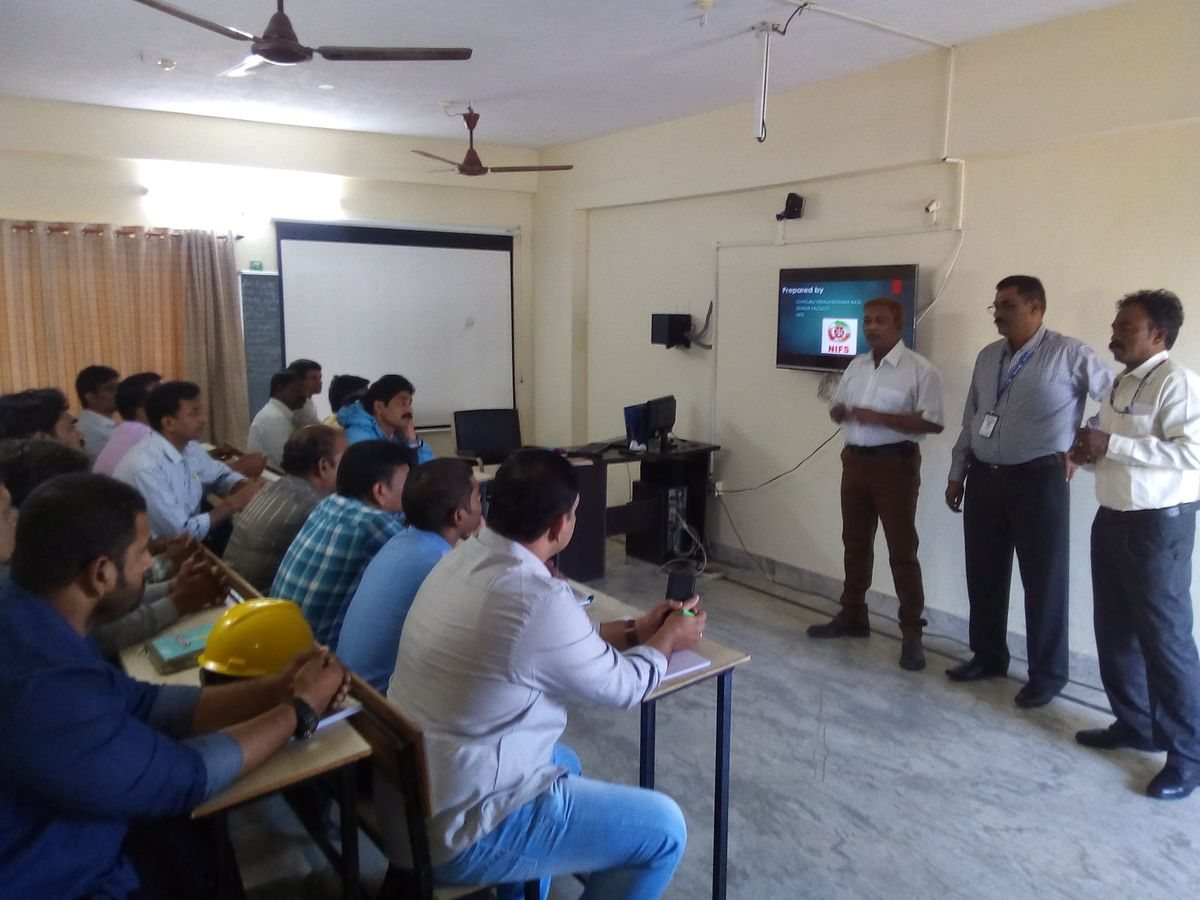
How do I get the certificate?
- Register free with your name, mobile number and email (the certificate goes to this email).
- Read the study guide. About two hours of theory.
- Take the final exam. 20 questions in 10 minutes. The clock cannot be paused, and unanswered questions score zero.
- Receive your certificate by email within 3 days. You can retake the exam to improve your score.
There is also a short written assignment (why ergonomic safety matters, and the symptoms of MSDs), which you can submit before or after the exam.
Free course · NIFS ES
Register free and start now
3 hours online, a study guide and a certificate by email. Fill this in and you go straight into the course.
Looking for a free fire safety course instead?
This NIFS course is about ergonomics. If you searched for a free fire safety course with a certificate, see our checked comparison of free fire safety and safety courses. For a recognised qualification, compare the Diploma in Fire & Safety and the Advanced Diploma in Industrial Safety (ADIS), or talk to NIFS admissions.
Sources: International Ergonomics Association, WHO, NIOSH and the NIFS Ergonomic Safety course. Updated 1 October 2026.
Companies Currently Hiring Through NIFS
KPC PROJECTS LTD
3 positions open
PON PURE CHEMICAL INDIA PRIVATE LIMITED
Safety Trainee
Frequently Asked Questions
Is the NIFS Ergonomic Safety course really free?
Yes. The NIFS Ergonomic Safety course (course code NIFS ES) is a free online course. There is no fee to register, read the material, or take the final assessment.
How long is the free ergonomic safety course?
Three hours in total: about two hours of theory and one hour for the assessment.
Will I get a certificate for the free ergonomic course?
NIFS sends a certificate of completion to your registered email within 3 days of completing the final assessment.
How is the final assessment conducted?
It has 20 multiple-choice questions worth 1 mark each, with no negative marking and a 10-minute timer that cannot be paused. You can retake it any time to improve your score.
What is ergonomics?
Ergonomics is the discipline of designing work, tools and workplaces to fit the person, so that human well-being and overall system performance improve. In practice it means setting up a desk, tool or lifting task so it does not strain the body.
What causes work-related musculoskeletal disorders?
NIOSH names repetition, force, non-neutral (awkward) posture and vibration as the main risk factors. Poor workstation setup, long static postures, poor lighting and workload stress also contribute.
Who should take the ergonomic safety course?
Anyone who works at a desk, on a shop floor or on a site and wants to prevent work-related injuries: employees, supervisors, safety trainees and students.
Start Your Career in Industrial Safety Today
NSDC-approved Diploma, Advanced Diploma, and Degree programs with 100% placement assistance at top companies like L&T, Adani, and Reliance.