
The Biggest Myth in Safety: It's Not the Worker's Mistake
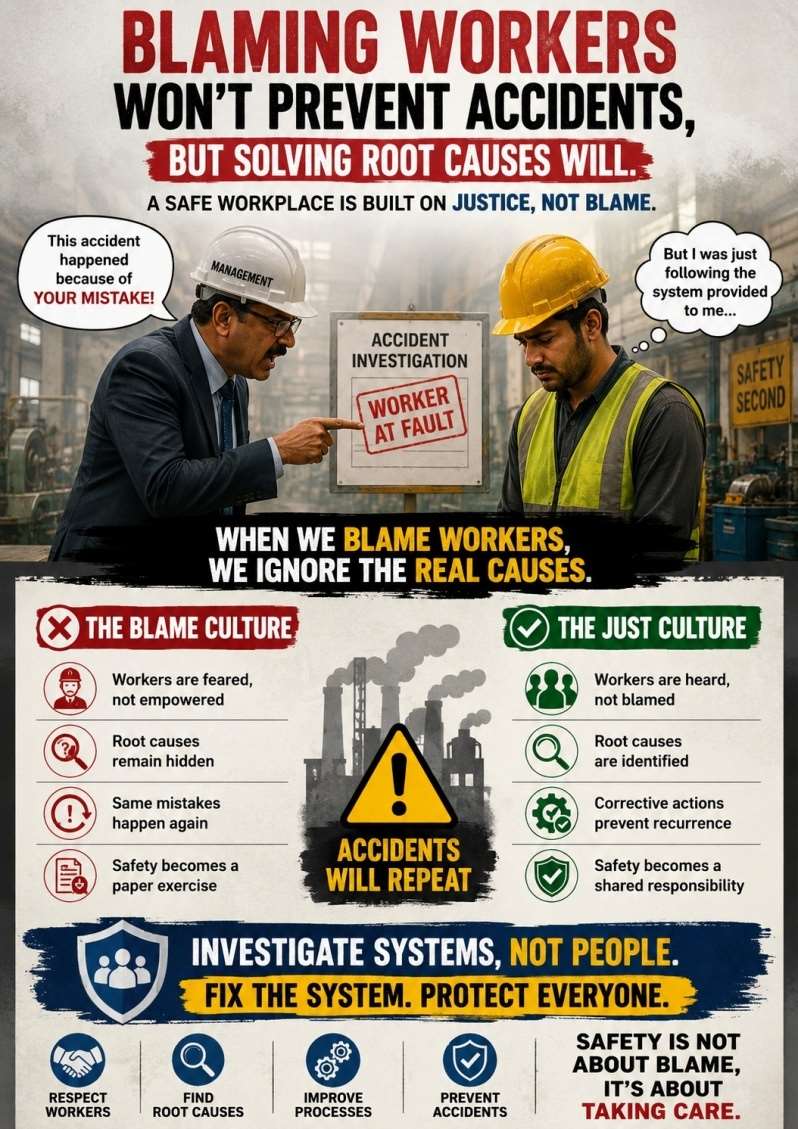
Look at almost any major industrial accident report from fifty years ago, and you will likely find a familiar culprit: human error. Even today, when a valve is left open, a forklift tips, or a lockout-tagout procedure fails, the immediate reaction in many boardrooms and supervisor offices remains stubbornly defensive. The blame shifts down. We write off the incident as "the worker's mistake," issue a disciplinary warning, mandate a retraining session, and consider the case closed. It is a clean, comforting lie. But it is fundamentally a myth.
When we attribute systemic failures to individual blunders, we are not actually doing safety work; we are doing blame management. True Occupational Safety, Health, and Environment (OSHE) excellence requires us to look past the immediate actor and interrogate the architecture of the system itself.
The Illusion of the 'Careless Worker'
Human error is not the cause of a failure; it is the symptom of a deeper systemic vulnerability. People do not show up to work intending to hurt themselves or damage equipment. Instead, workers operate within a web of competing pressures, poorly designed interfaces, fatigue, and ambiguous procedures. When an accident happens, the worker's action is merely the final trigger in a sequence that was engineered long before they arrived at the job site.
Consider a technician who bypasses a safety guard to clear a jammed conveyor belt. A superficial investigation blames the technician for violating a safety rule. A deeper, systemic analysis reveals a different reality:
- The production quota was recently doubled, creating intense pressure to minimize downtime.
- The formal protocol to safely shut down the line takes 20 minutes due to a poorly placed control panel.
- Management historically ignored rule-bending as long as production targets were met.
In this environment, bypassing the guard was not a random act of negligence. It was a rational adaptation to conflicting organizational demands. The system punished compliance and rewarded risk-taking — until that risk backfired.
"Industrial accidents are rarely caused by a single person's mistakes; they are usually caused by systemic organizational failures."
The "Illusion of the Careless Worker" is a management bias where companies blame individual employees for accidents to avoid taking responsibility for unsafe working conditions. In reality, a worker's "carelessness" is often the final result of poor safety systems, bad management decisions, and faulty equipment.
The Breakdown of Accident Factors
Modern industrial safety models show that accidents happen when multiple organizational layers fail at the same time:
1. The Core Illusion (Individual Level)
- Active Errors: Direct actions like slipping, tripping, missing a step, or forgetting a protocol.
- Psychological Strain: Physical exhaustion from long shifts, cognitive overload, and high workplace stress.
2. Technical & Workplace Environment
- Equipment Issues: Poorly maintained machines, missing safety guards, or broken warning alarms.
- Ergonomic Hazards: Loud noise levels, bad lighting, extreme heat, or poorly designed control panels.
3. Operational & Management Failures
- Production Pressure: Management prioritizing speed and profits over employee safety protocols.
- Training Deficits: Lack of proper safety drills, unclear standard operating procedures (SOPs), or poor onboarding.
4. Latent Organizational Vulnerabilities
- Safety Culture: A workplace environment that ignores minor safety violations until a major accident occurs.
- Resource Allocation: Cutting budgets for high-quality protective gear, safety inspectors, and structural maintenance.
Why Blame Is a Safety Dead End
Relying on "worker mistake" as a root cause is actively dangerous for two reasons.
Firstly, it creates a culture of fear and concealment. When workers know that mistakes lead to punishment, they stop reporting near-misses, minor injuries, and hazardous conditions. The data goes underground. Management loses its visibility into the actual state of operations, leaving the organization blind to emerging risks until a catastrophic failure occurs.
Secondly, blame fixes nothing. Firing or penalizing a worker leaves the underlying trap completely intact for the next person. If a system relies entirely on a human being executing a task perfectly 100% of the time, that system is fundamentally broken. Humans are biological entities subject to fatigue, distraction, and cognitive overload. Expecting flawless human performance is an engineering failure, not a moral one.
Designing for Resilience
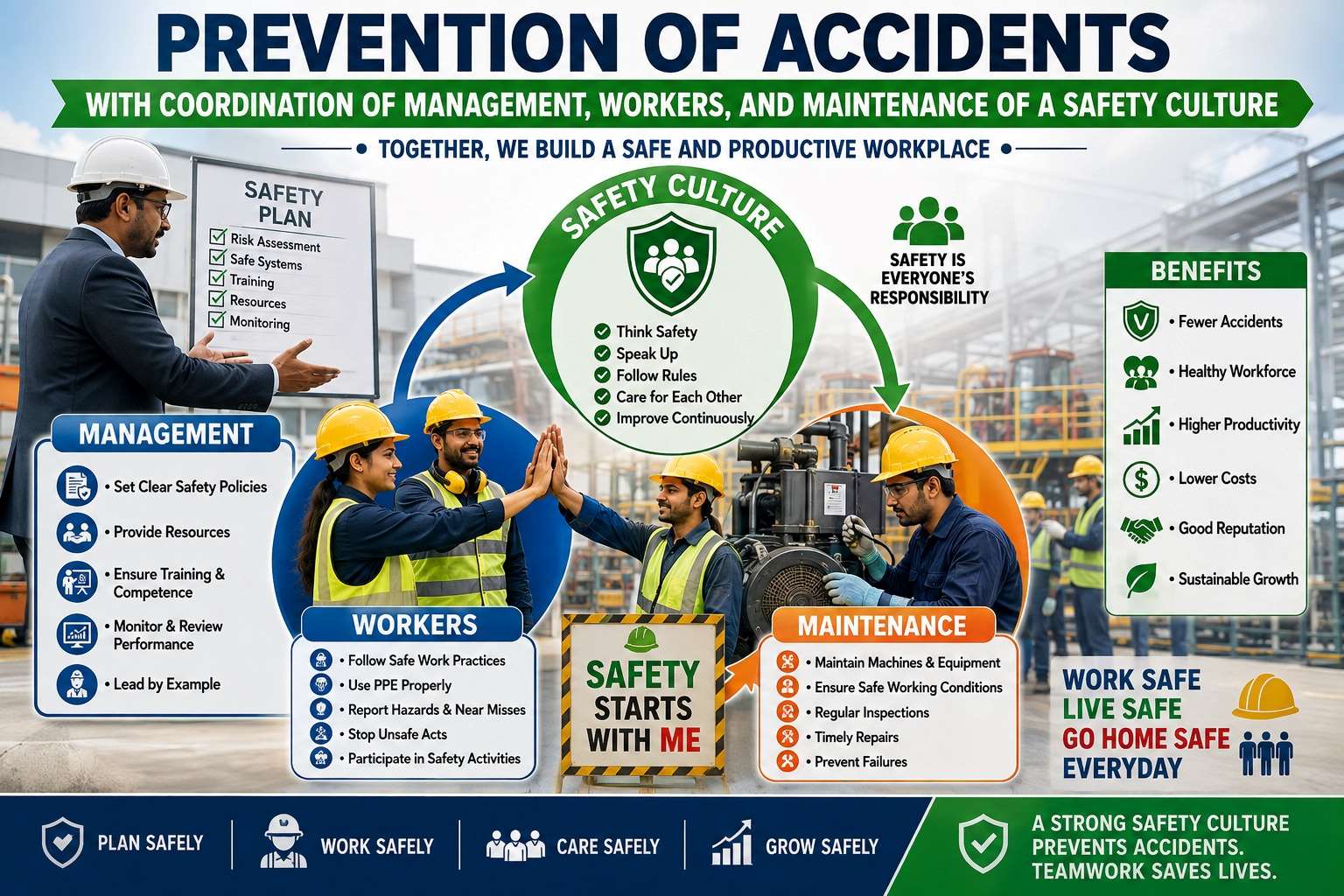
Designing for resilience entails changing our focus from preventing human errors to developing systems that can withstand them. The goal is to create a workplace where a human error causes a small blip rather than a devastating calamity.
Shifting away from the myth of human mistake entails adopting Human and Organizational Performance (HOP) principles and current safety engineering. We must design systems that acknowledge human fallibility and incorporate resilience.
- Focus on Latent Conditions: Spend less time policing behavior and more time identifying latent organizational defects — such as resource deficits, vague instructions, or conflicting priorities — that invite error.
- Decrease the Consequence of Error: A robust safety system ensures that when a human inevitably slips up, the system absorbs the mistake without causing injury. This means relying on hard engineering controls, interlocks, and physical barriers rather than warnings and policy reminders.
- Learn from Normal Work: Do not wait for an accident to audit safety. Talk to workers during normal operations to understand the gap between how procedures are written on paper and how work is actually performed on the shop floor. They know where the system traps are; we just need to ask.
"Safety is not defined by the absence of accidents, but by the presence of capacity. It is time to retire the myth of the worker's mistake and start building systems strong enough to handle human reality."
Companies Currently Hiring Through NIFS
CBRE - IT SECTOR
EHS EXECUTIVE
DETECT TECHNOLOGY
SAFETY OFFICER
GAIL (India) Limited
FIRE SAFETY OFFICER
Frequently Asked Questions
What is the 'worker's mistake' myth in workplace safety?
It's the common but flawed practice of blaming an individual employee's error for an industrial accident, instead of investigating the systemic conditions — like production pressure, poor equipment, or unclear procedures — that made the error likely to happen in the first place.
What is a 'just culture' in safety management?
A just culture is a workplace approach where near-misses and mistakes are reported openly instead of hidden out of fear of punishment. It focuses on identifying and fixing root causes in the system rather than disciplining individual workers, which improves visibility into real risks.
What is Human and Organizational Performance (HOP)?
HOP is a modern safety engineering approach that accepts human error as inevitable and designs workplaces to absorb it safely — through engineering controls, interlocks and physical barriers — rather than relying only on rules, warnings, and worker vigilance.
Start Your Career in Industrial Safety Today
NSDC-approved Diploma, Advanced Diploma, and Degree programs with a dedicated placement cell.