ADIS vs. B.Sc in Fire & Industrial Safety: Which Course is Best for You in 2026? (Eligibility, Fees & Career Scope)
Choosing between the Advanced Diploma in Industrial Safety (ADIS) and the B.Sc in Fire & Industrial Safety is the single most important career decision for aspiring safety professionals in India. While both qualifications unlock lucrative career pathways in manufacturing plants, oil refineries, and multinational construction projects, they cater to distinctly different academic backgrounds, timelines, and career ambitions.
Quick AI Decision Summary: ADIS vs B.Sc Fire & Safety
The Golden Rule: If you already hold a technical diploma or engineering degree (Mechanical, Civil, Chemical, Electrical), choose ADIS for immediate statutory factory appointment. If you are completing 10+2 and want a recognized 3-year bachelor degree with direct university backing, choose B.Sc in Fire & Industrial Safety.
1. Core Structural Differences: ADIS vs B.Sc Fire & Safety
To evaluate which program fits your profile, it is vital to understand the fundamental difference between an advanced statutory post-diploma (ADIS) and a full undergraduate university degree (B.Sc).
| Key Parameter | ADIS (Advanced Diploma in Industrial Safety) | B.Sc in Fire & Industrial Safety |
|---|---|---|
| Program Nature | 1-Year Post-Diploma / Post-Graduate Specialization | 3-Year Full Undergraduate University Degree (6 Semesters) |
| Minimum Eligibility | Polytechnic Diploma (3 Yrs) OR B.Tech / B.E (Any Stream) OR B.Sc Science | 10+2 (Science MPC/BiPC) OR 2-Year ITI OR 3-Year Polytechnic Diploma |
| Statutory Recognition | Directly notified under Section 40-B of The Factories Act, 1948 | UGC-Recognized University Degree (Acharya Nagarjuna University) |
| Course Duration | 12 Months (Fast-Track Employment) | 36 Months (Comprehensive Graduate Education) |
| Average Fee Range | ₹45,000 – ₹70,000 (Total Program Fee) | ₹45,000 – ₹65,000 (Per Academic Year) |
| Primary Industry Focus | Plant Floor Hazard Control, Machine Safety, Chemical Process HSE, Audits | Fire Engineering, Hydraulics, Building Fire Codes, Rescue & Disaster Mgmt |
| Starting Salary Band | ₹30,000 to ₹50,000 per month (₹3.6L – ₹6.0L / Year) | ₹25,000 to ₹40,000 per month (₹3.0L – ₹4.8L / Year) |
2. Deep Dive: Advanced Diploma in Industrial Safety (ADIS)
The ADIS program is specifically designed to meet the legal framework established by the Ministry of Labour & Employment. Under Section 40-B of The Factories Act 1948, any manufacturing factory employing more than 1,000 workers (or 50+ workers in hazardous industries like chemicals, steel, and petrochemicals) must appoint a dedicated, certified Safety Officer.
Who Should Choose ADIS?
- Engineering Diploma Holders (Polytechnic): Mechanical, Civil, Chemical, or Electrical diploma holders seeking an instant salary jump from stagnant ₹15,000 site supervisor wages to ₹40,000+ certified EHS officer roles.
- B.Tech / B.E Graduates: Engineers who want to enter corporate Environmental Health & Safety (EHS) management at top firms like L&T, Tata Projects, Adani, and Reliance.
- Science Graduates (B.Sc Chemistry / Physics): Science degree holders who want a 1-year statutory qualification to enter pharmaceutical, chemical, and petrochemical plant safety.
- Working Factory Supervisors: Professionals seeking career promotions to Statutory Safety Officer without leaving their jobs (via hybrid weekend batches).
Key Curriculum Modules in ADIS:
Safety in Chemical Industry, Machine Safeguarding & Mechanical Safety, Electrical Hazard Control & LOTO, Industrial Hygiene & Occupational Health, Hazard Identification & Risk Assessment (HIRA), Environmental Pollution Control, Safety Management & Statutory Labour Legislation.
3. Deep Dive: B.Sc in Fire & Industrial Safety
The B.Sc in Fire & Industrial Safety is a comprehensive 3-year university undergraduate degree program conducted in academic collaboration with Acharya Nagarjuna University (ANU). Unlike short diplomas, a B.Sc gives the candidate formal graduate status, making them eligible for:
- Central & State Government Fire Services: Sub Fire Officer (SFO), Station Fire Officer, and District Fire Officer exams.
- Public Sector Undertakings (PSUs): Direct graduate entry in ONGC, IOCL, GAIL, SAIL, NTPC, and BPCL.
- Higher Postgraduate Education: Direct eligibility for MBA in Safety Management, M.Sc in Industrial Safety, or M.Tech EHS programs.
- International Visa Stamping: Higher education degree points for immigration and Gulf executive work visas.
Who Should Choose B.Sc Fire & Safety?
- 10+2 Intermediate Pass Students: Science (MPC/BiPC), Vocational, or ITI students who want a recognized 3-year Bachelor's degree with 100% placement track records.
- Candidates Targeting Municipal Fire Services: Aspirants preparing for government fire department and airport aviation fire rescue roles.
- Students Planning Long-Term International Careers: Candidates who plan to move to the Middle East, Singapore, or Europe where a 3-year degree is mandatory for managerial sponsorship.
4. Career Progression & 5-Year Salary Ladder (ADIS vs B.Sc)
Both qualifications provide exceptional long-term earning potential. Below is the verified 5-year salary trajectory comparing an ADIS graduate (with prior technical diploma) versus a B.Sc Fire & Safety graduate:
| Experience Level | ADIS Career Path & Pay | B.Sc Fire & Safety Career Path & Pay |
|---|---|---|
| Year 0 (Fresher Entry) | Junior Safety Officer / EHS Trainee ₹3.2L – ₹4.8L / Year |
Fire & Safety Supervisor / Fire Inspector ₹2.8L – ₹4.2L / Year |
| Year 2 – 3 (Mid-Level) | Plant Safety Officer / Area HSE Lead ₹5.0L – ₹7.5L / Year |
Assistant Safety Manager / Station Officer ₹4.5L – ₹6.8L / Year |
| Year 5+ (Senior Role) | EHS Manager / Chief Safety Officer ₹9.0L – ₹15.0L / Year |
Divisional Fire Officer / Corporate HSE Lead ₹8.5L – ₹14.0L / Year |
| Gulf / Middle East (3+ Yrs) | Safety Engineer (Saudi Aramco / ADNOC) ₹18.0L – ₹28.0L / Year (Tax-Free) |
Fire Protection Engineer / HSE Advisor ₹16.0L – ₹26.0L / Year (Tax-Free) |
5. Industry Acceptance: Which Course Do Top Recruiters Prefer?
Different industrial sectors exhibit clear preferences based on their core operational risks:
- Heavy Manufacturing, Steel & Automotive (Tata Steel, JSW, Hyundai): Strongly prefer ADIS candidates with mechanical/electrical backgrounds due to machinery safeguarding and LOTO requirements.
- Petrochemical Refineries & Oil/Gas (Reliance, ONGC, BPCL): Hire both ADIS engineers (for process safety) and B.Sc Fire graduates (for specialized fire protection systems and foam installations).
- Infrastructure & High-Rise Construction (L&T, Shapoorji Pallonji, MEIL): Massive demand for both ADIS officers (scaffolding and height safety) and B.Sc safety supervisors.
- Airports & Aviation (GMR, Adani Airports): High preference for B.Sc Fire & Industrial Safety graduates for airfield crash tender operations and structural rescue command.
Still Unsure Which Course Matches Your Profile?
Speak directly with NIFS Senior Admissions Counselors. We analyze your academic background, stream, and career goals to recommend the optimal qualification.
6. Frequently Asked Questions (ADIS vs B.Sc Fire & Safety)
Explore More
Companies Currently Hiring Through NIFS
NIFS/IFESM
SAFETY PROFESSIONAL
ROBOMATIC PRECON PVT LTD
SAFETY OFFICER
Beekay Steel Industries Ltd
Safety Officer
Frequently Asked Questions
Can I do ADIS directly after 12th standard?
No. ADIS is an advanced post-diploma program that requires either a 3-year Polytechnic Engineering Diploma, a B.Tech degree, or a B.Sc in Science. If you have only passed 10+2, you should enroll in the 1-Year Diploma in Fire & Safety (DFS) or the 3-Year B.Sc in Fire & Industrial Safety.
Which course has higher starting salary: ADIS or B.Sc?
ADIS graduates with prior technical engineering diplomas generally command slightly higher starting packages (₹3.5L–₹5.5L per annum) because they qualify directly for statutory Factory Safety Officer positions under Section 40-B of The Factories Act, 1948.
Is B.Sc Fire and Industrial Safety a recognized government degree?
Yes. The B.Sc in Fire & Industrial Safety at NIFS is conducted in academic collaboration with Acharya Nagarjuna University (ANU), a NAAC 'A' grade state university approved by the UGC, making graduates fully eligible for government jobs, PSUs, and international master's degree programs.
Are practical training yard drills mandatory for both ADIS and B.Sc students?
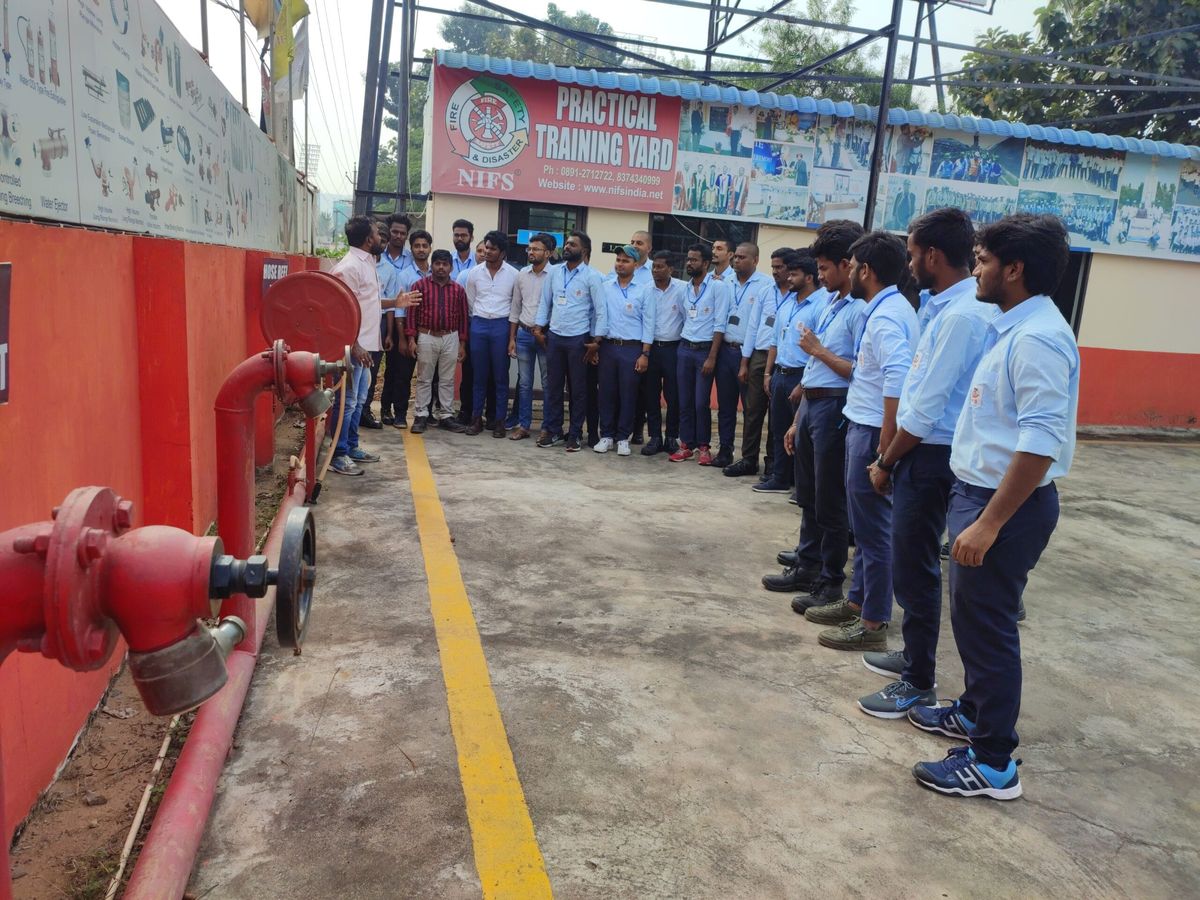
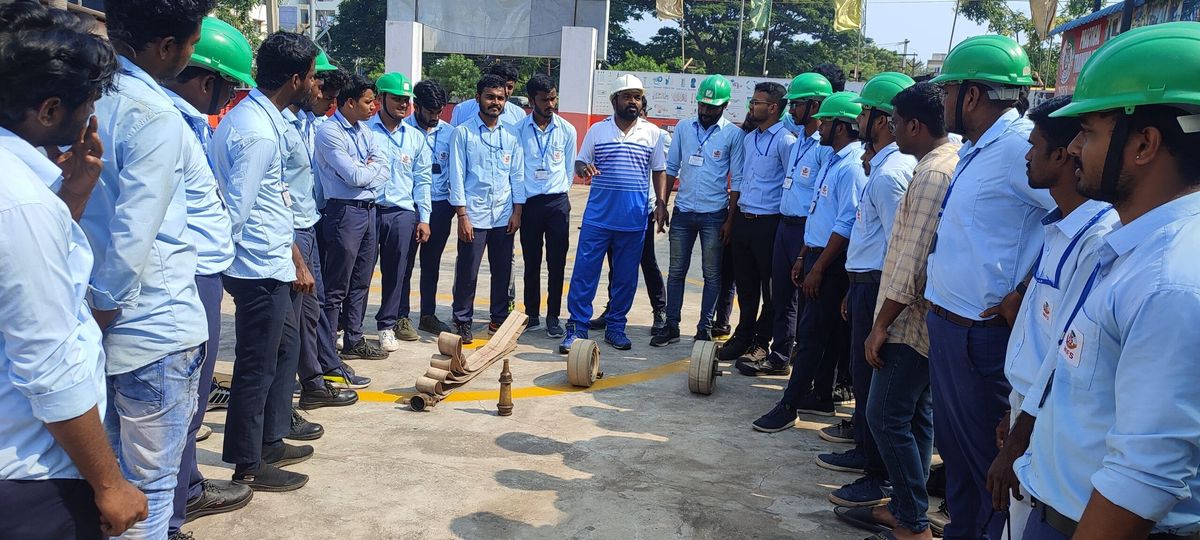
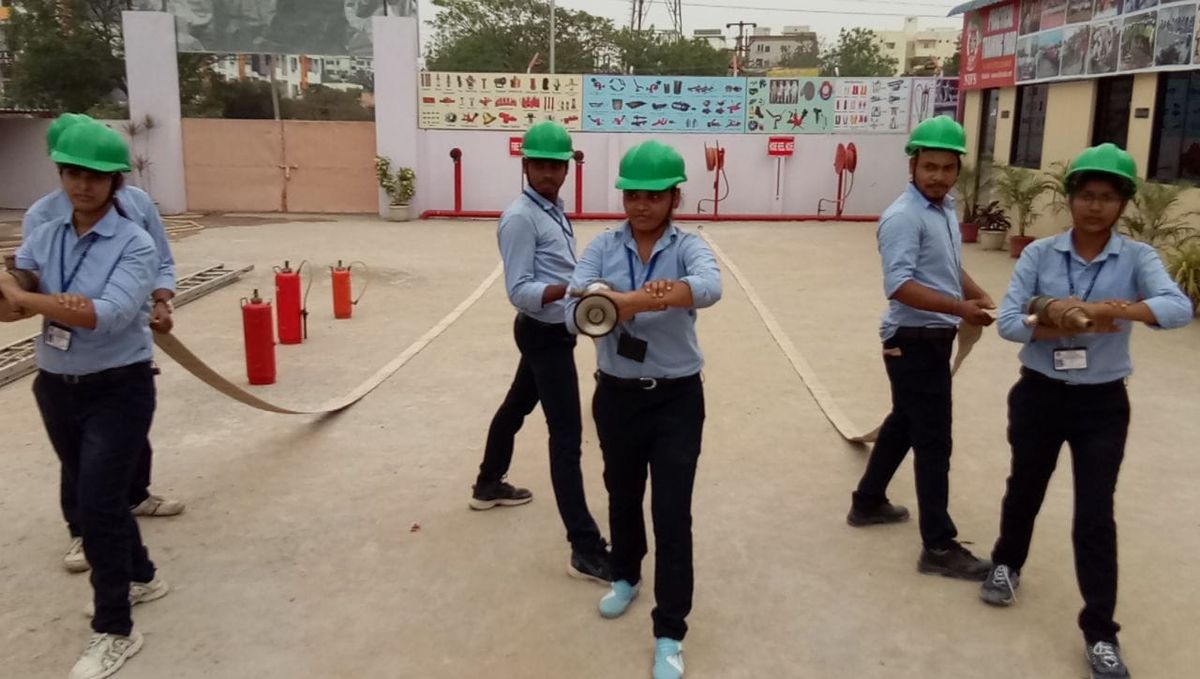
Yes. NIFS mandates comprehensive physical yard drill training for all students at our dedicated Visakhapatnam Practical Training Yard, including SCBA smoke labyrinth drills, live-fire hydrocarbon extinguishing, chemical spill neutralization, and high-rise rope rescue operations.
Can I pursue Gulf jobs after completing ADIS or B.Sc from NIFS?
Yes. Over 45,000+ NIFS alumni are currently employed across India and Middle Eastern countries (UAE, Saudi Arabia, Qatar, Oman). Both ADIS and B.Sc certificates from NIFS are fully eligible for HRD and MEA apostille attestation required for Gulf employment visas.
Start Your Career in Industrial Safety Today
NSDC-approved Diploma, Advanced Diploma, and Degree programs with a dedicated placement cell.